
Meditations on Yellowstone
Part II: Shapes of the Past
Exploring the John Moulton Homestead in Grand Teton National Park recalls my tentative first steps in leaving the familiar terrain of childhood to enter a new and uncertain world.
“Expose a child to a particular environment at his susceptible time and he will perceive in the shapes of that environment until he dies. The perceptive habits that are like imprintings or like conditioned responses carry their habitual and remembered emotions…I can sing an old Presbyterian Sunday School hymn, “The Fight is On, Oh Christian Soldiers,” and instantly I am seven or eight years old, it is a June day on the homestead, the coulee is full of buttercups, and a flickertail’s close-eared head is emerging in jerks from a burrow, the unblinking almond eye watching to see if I move. Only because I must have sung it to myself in that spot, a few bars of that tune can immerse me in the old sun and space, return me to the big geometry of the prairie and the tension of the prairie wind.”
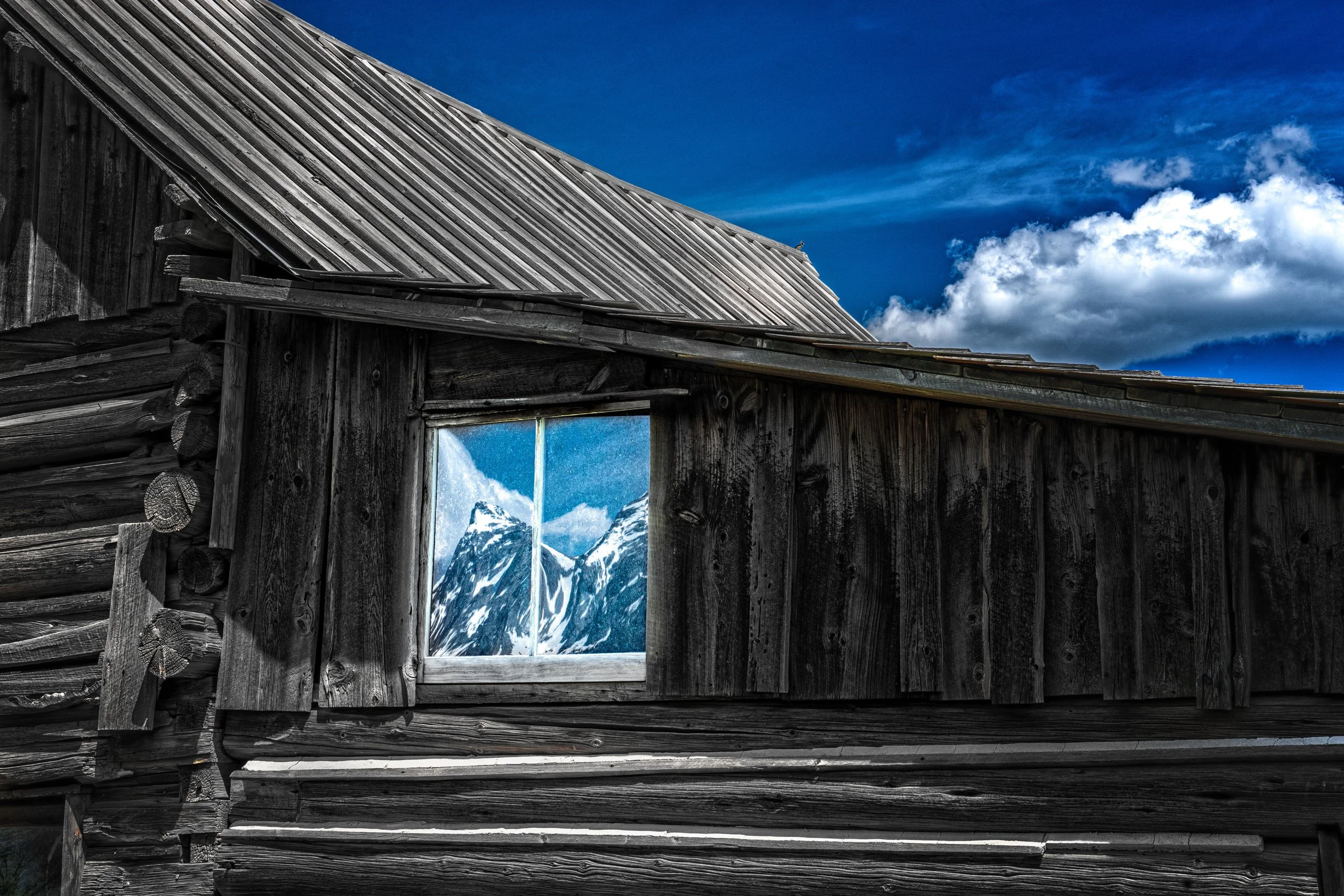
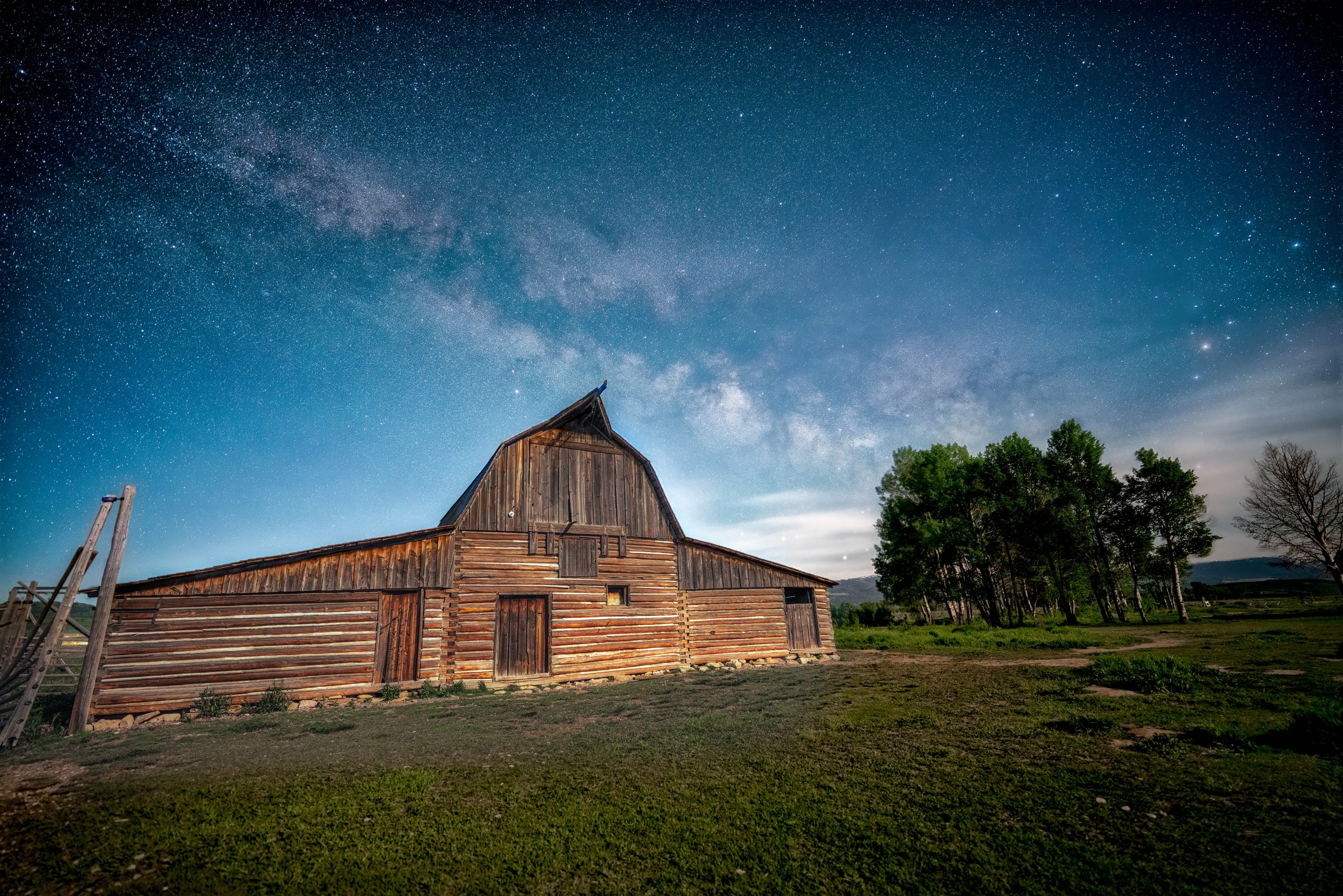
One of the peaks of the Tetons reflected in a window of the T.A. Moulton Barn in Grand Teton National Park, Wyoming.
(Continued from Part I)
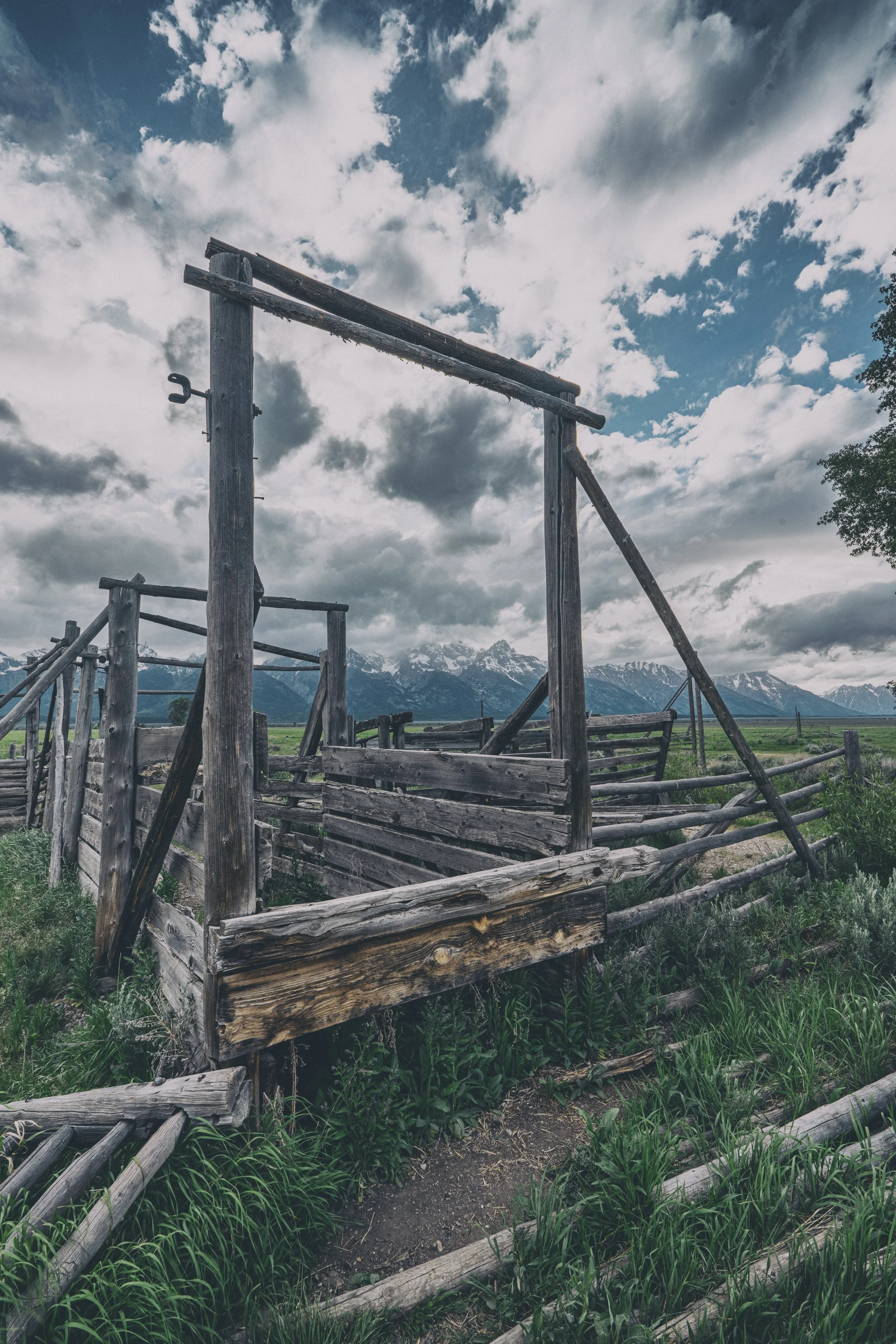
The rolling mist continued to drape the peaks of the Tetons in a ghostly vapor and spill into the lower Antelope Flats valley like an ephemeral waterfall, soon obscuring all but the immediate path leading to the northern end of the Moulton Homestead. I had lowered my head against the spitting rain, occasionally glancing at the small stream swollen with snowmelt which flowed alongside the gravel trail when I almost wandered into a fence post standing some 40 feet away from the abandoned farmhouse. It was a solitary remnant of an enclosure that probably encircled the modest homestead at one time. As I raised my head my glasses were immediately blurry with drizzle, so I stopped next to the post to dig in my pocket for a dry lens cloth. I turned my back to the elements and gave a few feeble swipes with the microfiber, but I succeeded only in further smearing my lenses. In exasperation I pulled out the corner of my shirt and give it a more intense effort.
During this brief interlude of focused futility, I hadn’t noticed that the sounds of the gurgling brook and howling wind had faded into the background and were now replaced with an eerie whistling noise. I tucked in my shirt, wrung out the soaked cloth and returned the semi-cleaned frames to my face to survey the desolate area. Perhaps there was a piece of loose sheet metal near the barn flapping in the breeze? No, the noise was closer than that, and now it seemed to vary in pitch in concert with the wind. I turned back to the modest farmhouse. The windows were still intact—perhaps there was a crack in one of the glass panes causing a sympathetic vibration? I adjusted my backpack and began to step over to the watery ditch when I noticed the whistling intensified in volume.
And then I immediately began to laugh.
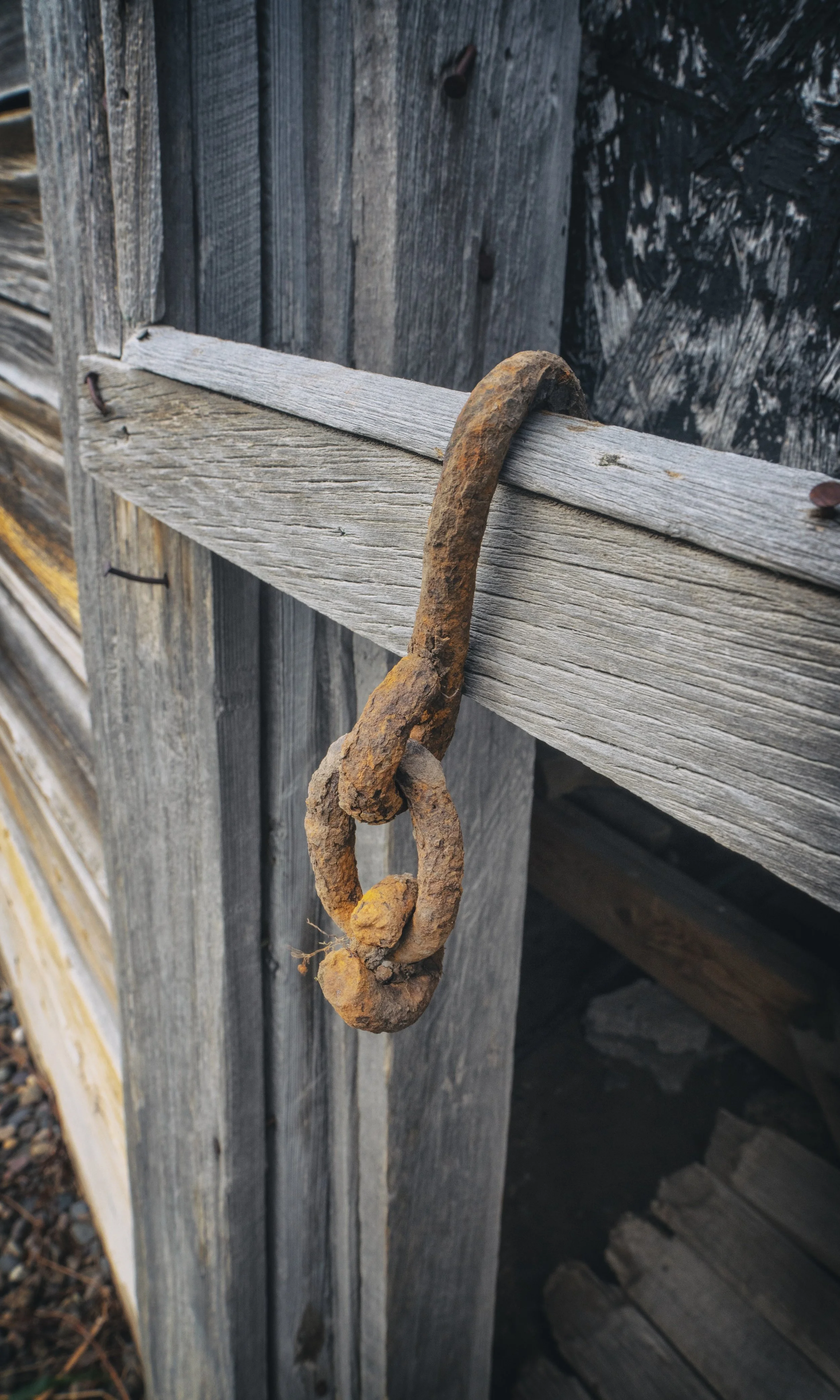
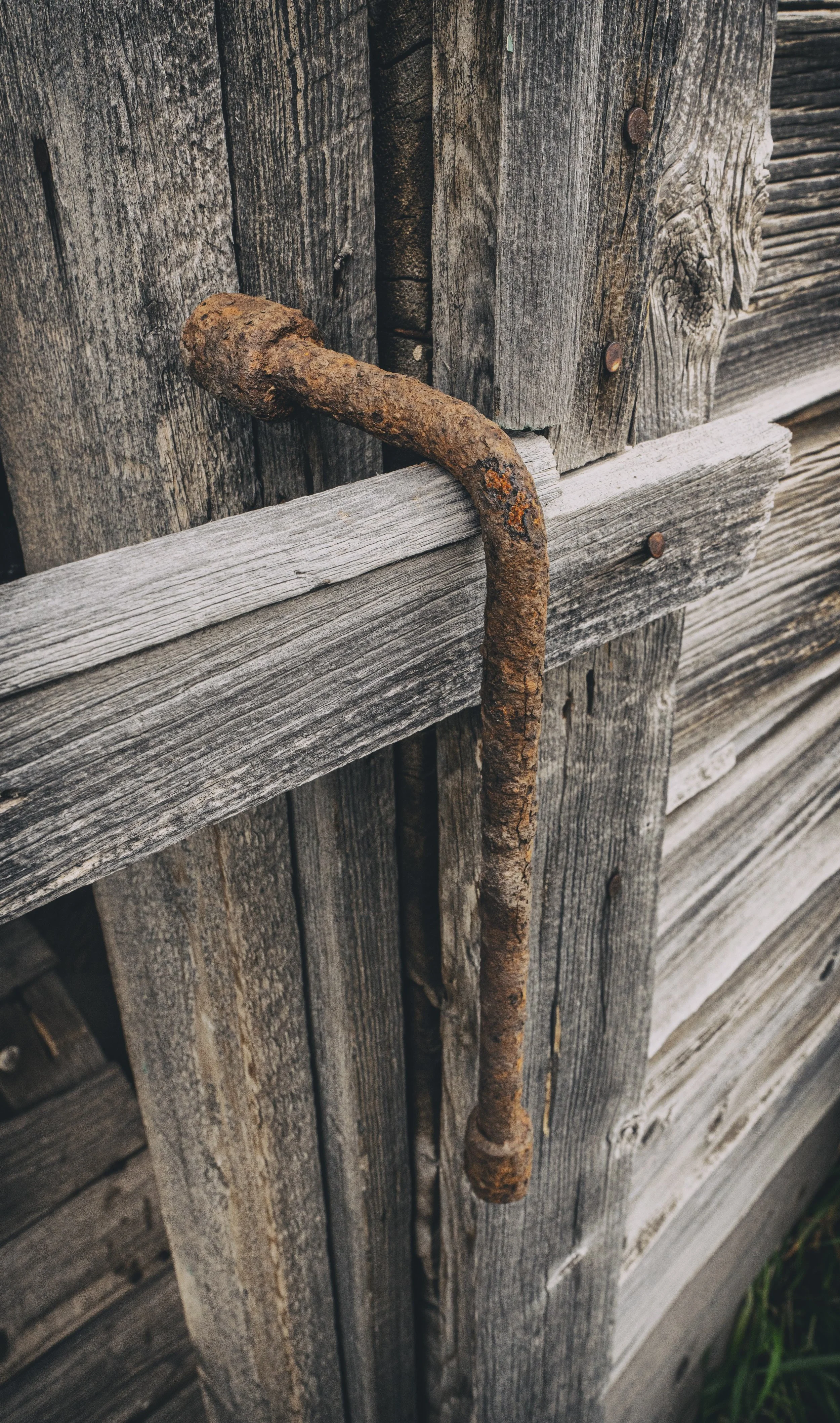
Directly in front of me, in plain sight and mere inches away, was a bent L-shaped tube resting against the ground and tethered at the top of the post with a small hook. It was the elbow piece of a cattle gate, full of precisely drilled holes that transformed the metal piece into a giant rusty flute.
In the spirit of Alan Lomax* I took out my phone and tried to capture this musical discovery, but what I managed was more “wind” and less “instrument.”
It was a warm and dreamy afternoon in early June, 1981, and I found myself walking the length of the driveway leading from my grandfather’s farmhouse to the main road about a tenth of a mile away. Two weekends a month my brother and I would stay with my father, as our parents had divorced earlier that year and he had temporarily moved back to his family’s farm in Central Kentucky. It was about two hours away from my home in Pewee Valley, a bedroom community located near the east side of Louisville, but it seemed much farther away as I had yet to make any friends and my brother was only three years-old at the time. To my suburban eyes this was a foreign land, exotic yet full of dangers just lurking beyond the forested boundaries of rolling fields and pastures. I had spent the morning under the sun-dappled canopy of trees surrounding the house, imagining I was Indiana Jones stranded on a dense jungle island, mere steps ahead of the pursuing enemy and its fusillade of poisonous darts when I spotted my escape route leading to the rare Red Flower (aka my grandmother’s rose bushes) and its fragrant and antidotal powers. Once I reached the door of my plane (the fence gate), the cliffhanger ended and my nine year-old mind was immediately confronted with the looming onset of boredom. I decided to see where the winding paved path to the right would lead.
There was a patch of lawn which ran alongside the drive, giving me plenty of space to follow the barbed wire fence of the adjoining fields of tobacco and corn. I knew not to touch the wire—I was still smarting from an earlier attempt to see if it was in fact electrified—so I hewed to the middle of the grass. I had no specific agenda, only aware that I was forbidden to cross the main road per my father’s orders. Once I arrived, I dutifully turned around, and in my reverie I looked up at the blue sky, so high and tall with faint wisps of motionless clouds hovering far away in the distance. I began feeling the wind blow against my hot face. As I drifted closer and closer to the fence line, I aimlessly raised my hand and could detect the vibration of the electric wire. It raised the hairs on my forearm.
That’s when I heard it.
A tiny, distant voice.
“We’ll take another caller in just a moment.”
Then another.
“…Long time listener…”
Then the rhythmic hum of…music?
I’m not imagining this.
I wasn’t close enough to the farm house to hear my music professor father practicing at the piano.
Where is it coming from? Across the field? From my uncle’s house on the other side of the road?
No.
A speck of a jet plane crept overhead.
No, it’s coming from…the fence itself.
The voices grew louder as I approached a nearby post. A piece of tin wrapped around the top of it was making contact with the electrified wire to form a rudimentary radio antenna, and as I warily leaned in I could make out the mellifluous timbre of Milton Metz, a famous local personality who appeared on the 50,000 watt 840 WHAS-AM radio station broadcasting out of Louisville. I never intentionally listened to the channel, which mostly specialized in talk shows and oldies music from the 50s and 60s. But at that moment I was entranced by this strange atmospheric phenomenon.
“There’s the usual backup at Spaghetti Junction* in downtown Louisville…” Wow, a place made of spaghetti?
“News at the top of the hour.” I don’t really want to hear the news.
“Eighty-four, Double-U, H, A, ESSSS!” Ha! I can sing along.
“Hello friends, this is Milton Metz. You know, when I want good home cooking, I like to go…”
I want to be home.
Right now.
I want to be back with my toys and my friends and my backyard with the swing set and monkey bars.
I want to skip over this station and find my favorite radio stations that I listen to all the time.
I don’t want to listen to WHAS.
Because right now I didn’t know I needed it until I heard the little station jingle.
I want my bed. I want the door to my bedroom. I want the carpet leading to the door to my bedroom.
I don’t want to be in this strange place anymore.
The voices abruptly stopped. I looked up again at the vast expanse of blue. The plane was still stuck in the same remote corner of the sky. I reached down to scratch the itch on my right leg as it brushed against a loose strand of Johnson grass growing out from the fence line. My face turned to the blinding sunlight on the other side of the driveway, and I stared long enough until I was insensible to everything around me. I felt a gradual centrifugal push, as if the earth were rotating me away from the fence. Slowly my eyesight began to return as I stumbled along the pavement, but I was soon met with a new visual obstacle—my eyes were flooded with tears.
I spent the rest of the weekend in a despondent mood, even more so after I had returned to my listening post the next day only to discover that the ions must have reversed polarity and thus were incapable of conjuring the station signal again. (I don’t know why but it just wouldn’t have been the same if I had simply dialed in on my dad’s portable radio. The magic couldn’t be replicated on a mere piece of battery-powered technology.)
I was irritable and barely responsive to my father’s queries that Sunday on the ride back to Elizabethtown, which was the meeting point with my mom as it was halfway between the farm and home. When my brother and I got in our car, she began peppering me with questions. I was looking out the window.
“How did it go?” She was chirpy.
Did she even miss us?
“Fine,” I grumbled. My voice was getting smaller.
“What did you do?”
As if you care.
“Nothing.” Smaller still.
“Surely you did something,” she persisted. I paused. I looked down at my feet, which weren’t quite able yet to reach the floorboard.
“Please don’t make me go back there,” I quietly implored. “There’s nothing to do and I don’t have any friends.”
“Then find something to do there,” my mom replied matter of factly. It was like she had the answer already prepared.
“It’s not fair,” I shot back. I rubbed my wet cheeks.
“Life’s not fair,” she rejoined.
It’s not fair that life’s not fair. You always say that. I didn’t make it that way.
“You’ll just have to find a way to make it work,” she continued. “This is how it is.”
“I don’t like that.” My eyes tried to meet hers, but she was staring at the road ahead.
“It’s a farm. Go out and play. Think of it as an adventure.”
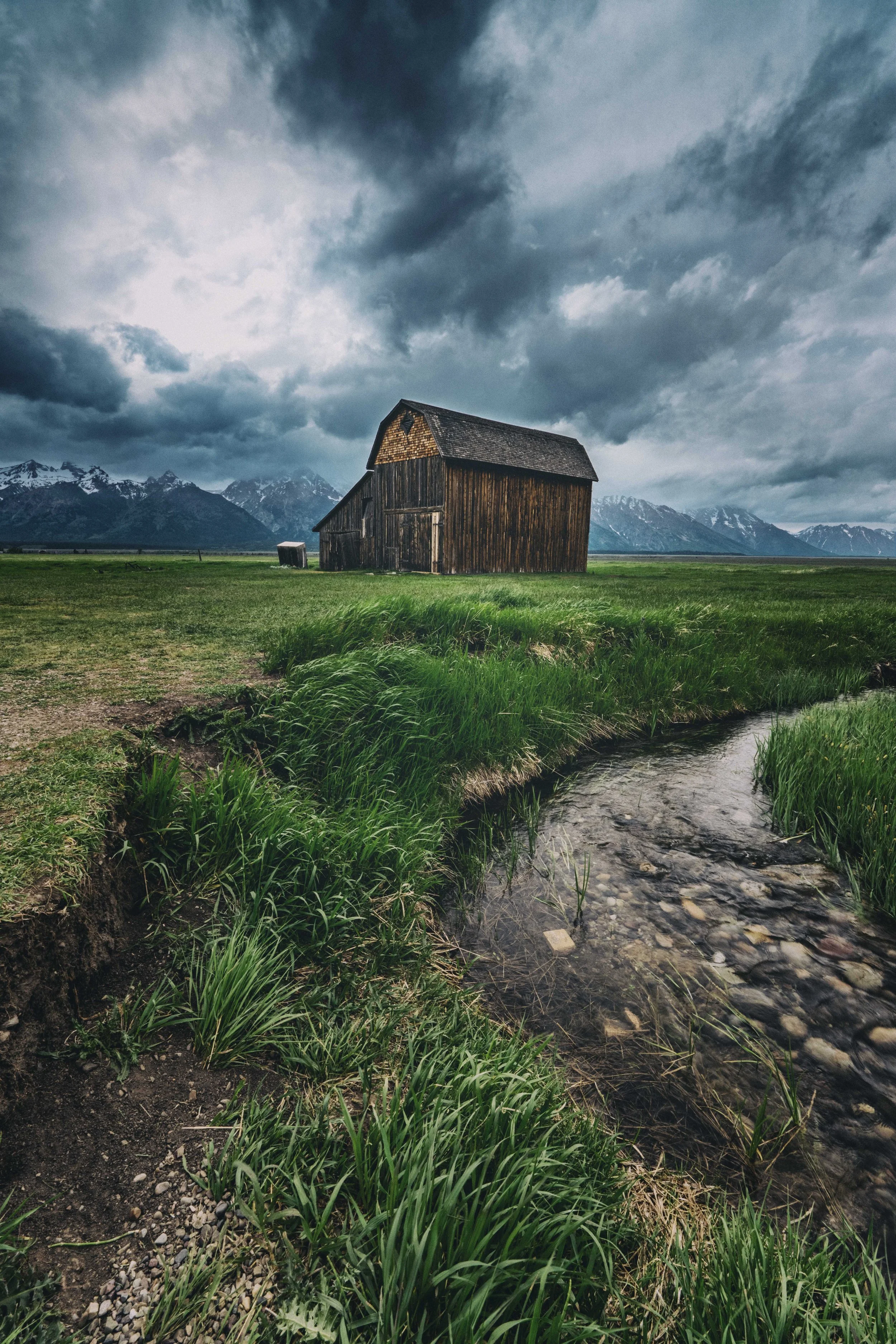
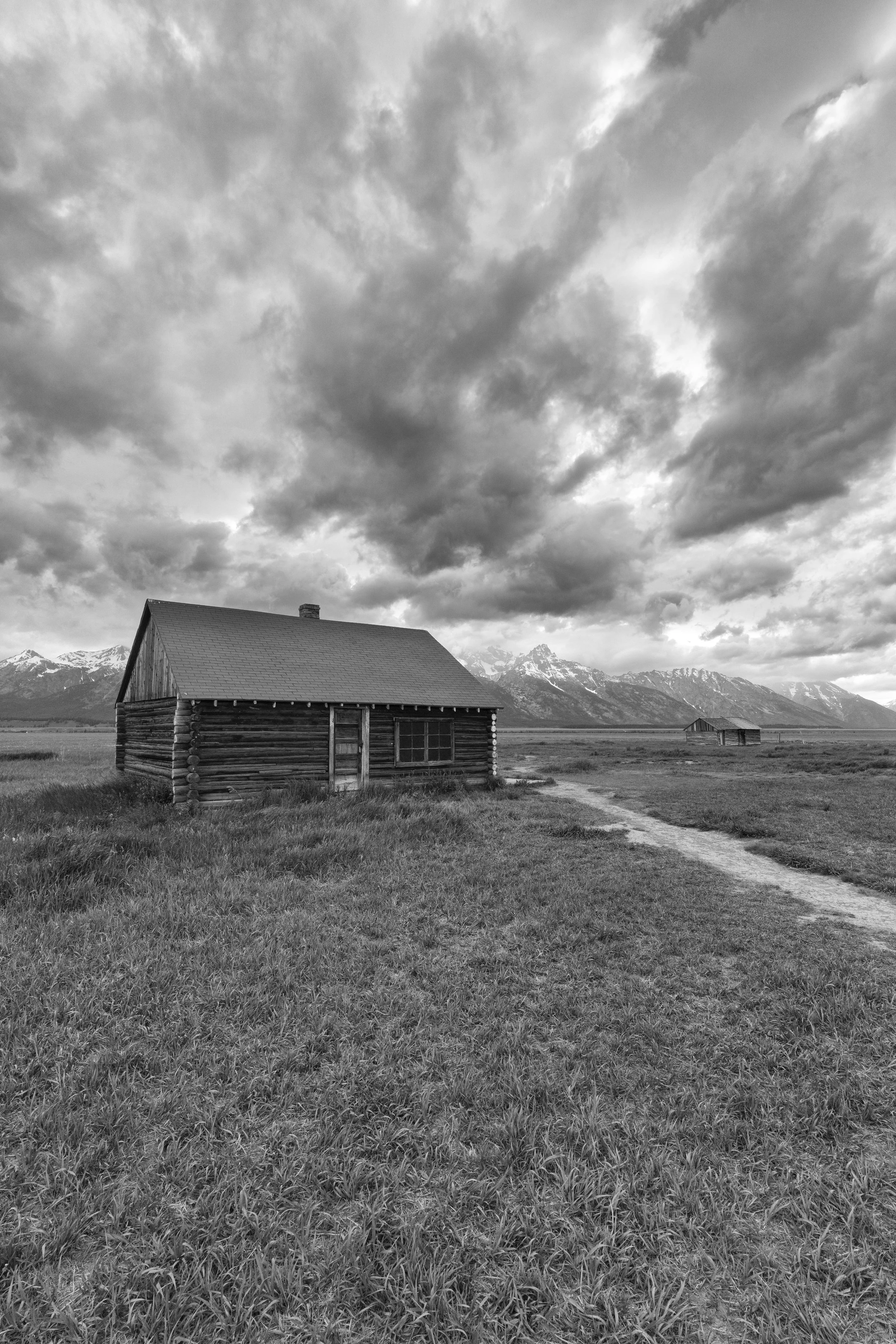
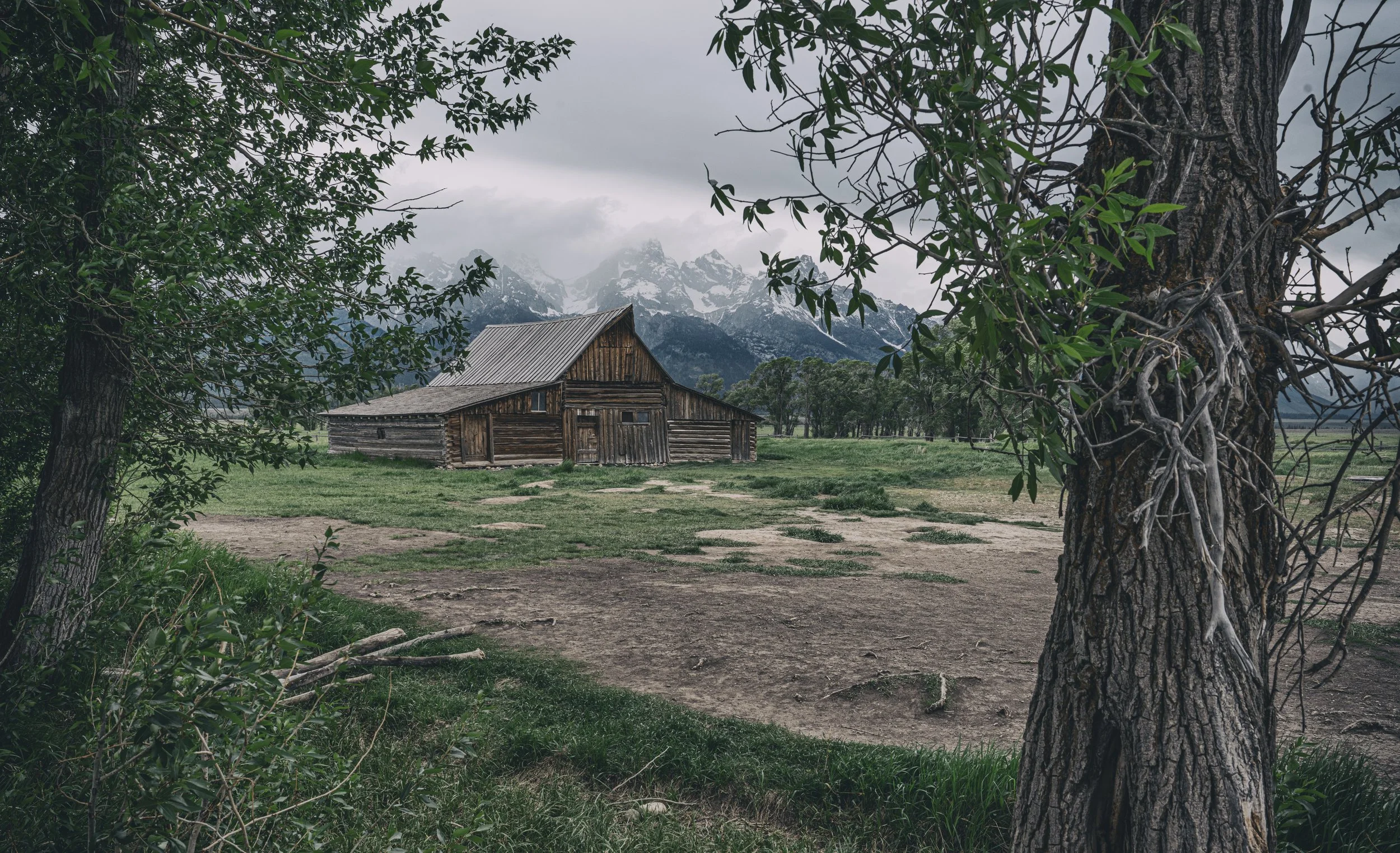
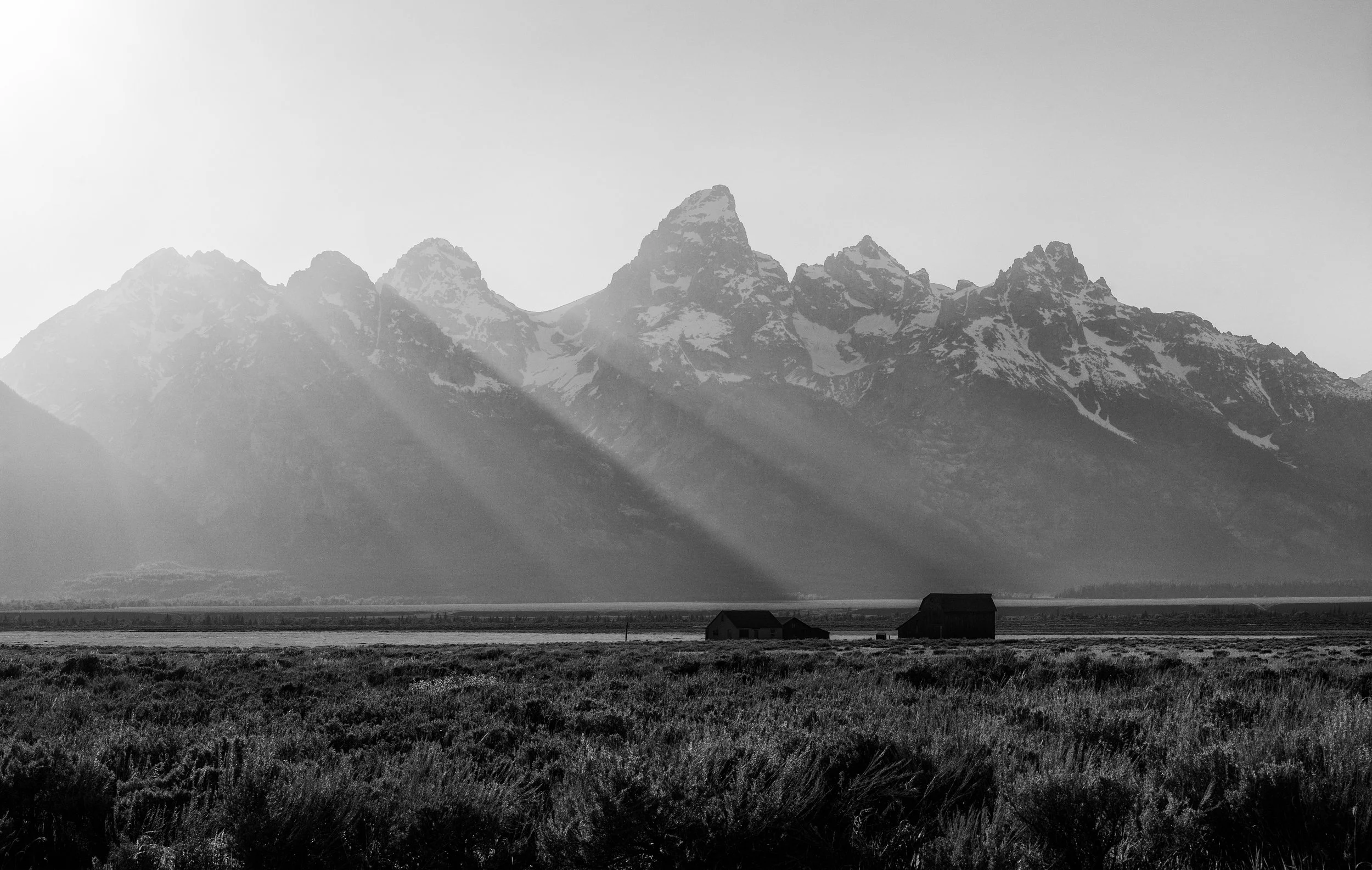
The Reed Moulton Barn is the northernmost structure remaining on the Moulton Homestead.
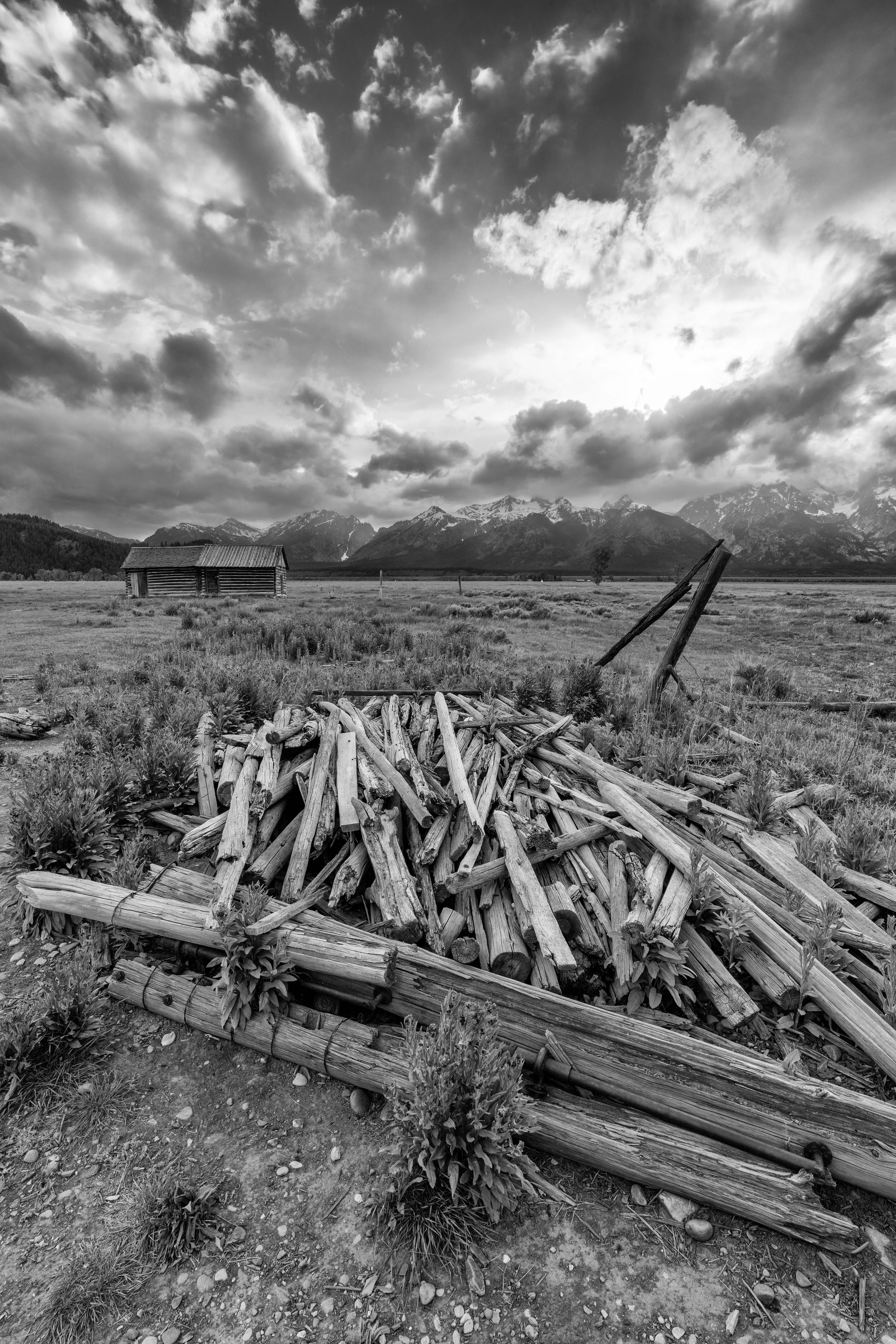
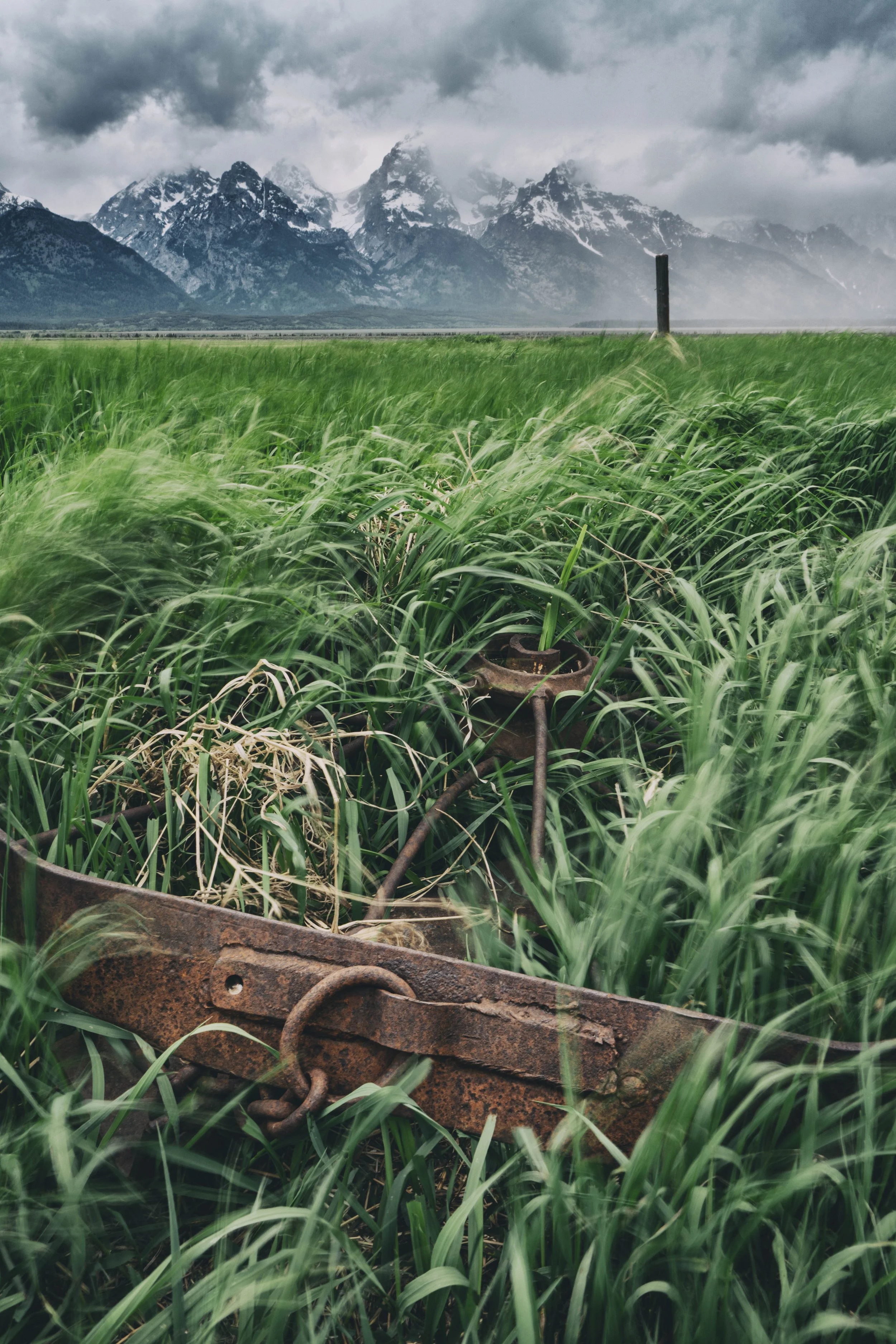
I left the singing pipe and headed up the path until I noticed another small stream on the other side of the bend leading up to the Reed Moulton barn, the northernmost structure on the homestead. From there I ascended the ridge to the clearing between the farmhouse and the small barn, but instead of exploring the buildings I slowly turned to take in the full view of the windswept flats and the acres of tall prairie grass moving in hypnotic undulations. It was as if a giant invisible hand were raking across their thick, fibrous strands. In the distance was another lonely fence post, a stolid visual counterpoint to the blowing blades and shifting clouds still hovering over the mountain peaks. I followed along the edge of the clearing seeking a good composition when I nearly stumbled over a wagon wheel left moldering in the thicket of green.
It was later that summer when I returned to my grandfather’s farm, and this time I decided to turn left out of the farmhouse instead of right. The pavement ended and gave way to a dirt road which took me past the old chicken coop my grandmother had once brought me in to collect eggs a couple of years before she passed with cancer in 1978. Further on were abandoned animal pens and ramshackle structures now housing a forgotten harrow and broken-down John Deere tractor. The road eventually curved in front of a cattle barn and then split off, one way leading to a tobacco barn and another leading to a large pasture whose opening passed under a sprawling tree laden with tiny green sour apples. I remembered Dorothy and the Scarecrow in The Wizard of Oz entering the darkening woods and dodging the red delicious projectiles hurled by the cantankerous fruit trees, so I decided to leave that threshold to cross for a future journey. The shadows just beyond the tree were growing longer anyway, and soon I would have to head back. Later my father said there was a fishing hole somewhere in the back fields and that we would go sometime. I had only been fishing once, with my other grandfather. Perhaps one day I would even venture out into the forest just beyond the fields.
But for now I knew that the farmhouse road went in two directions. And that the little green apples were completely inedible.
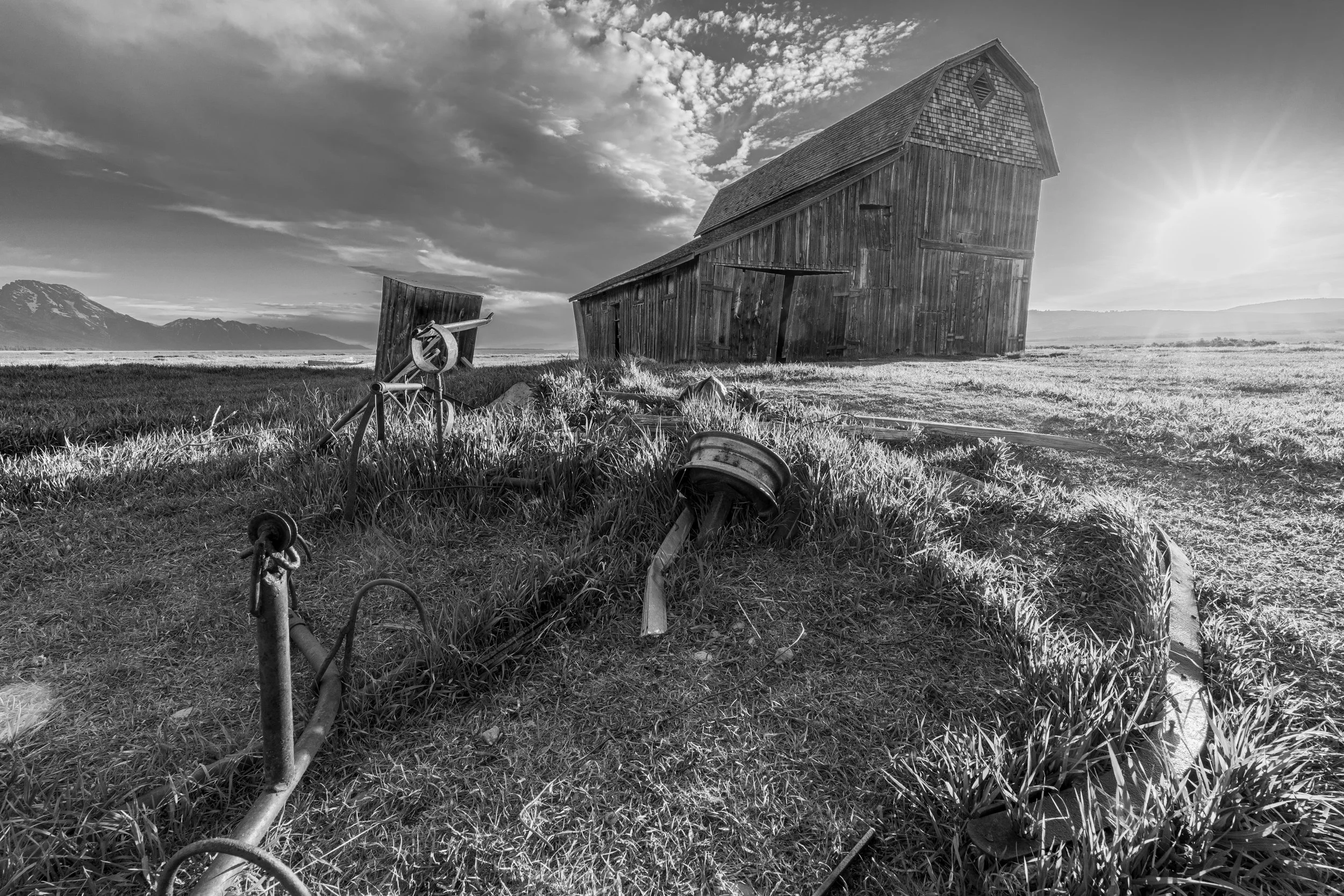
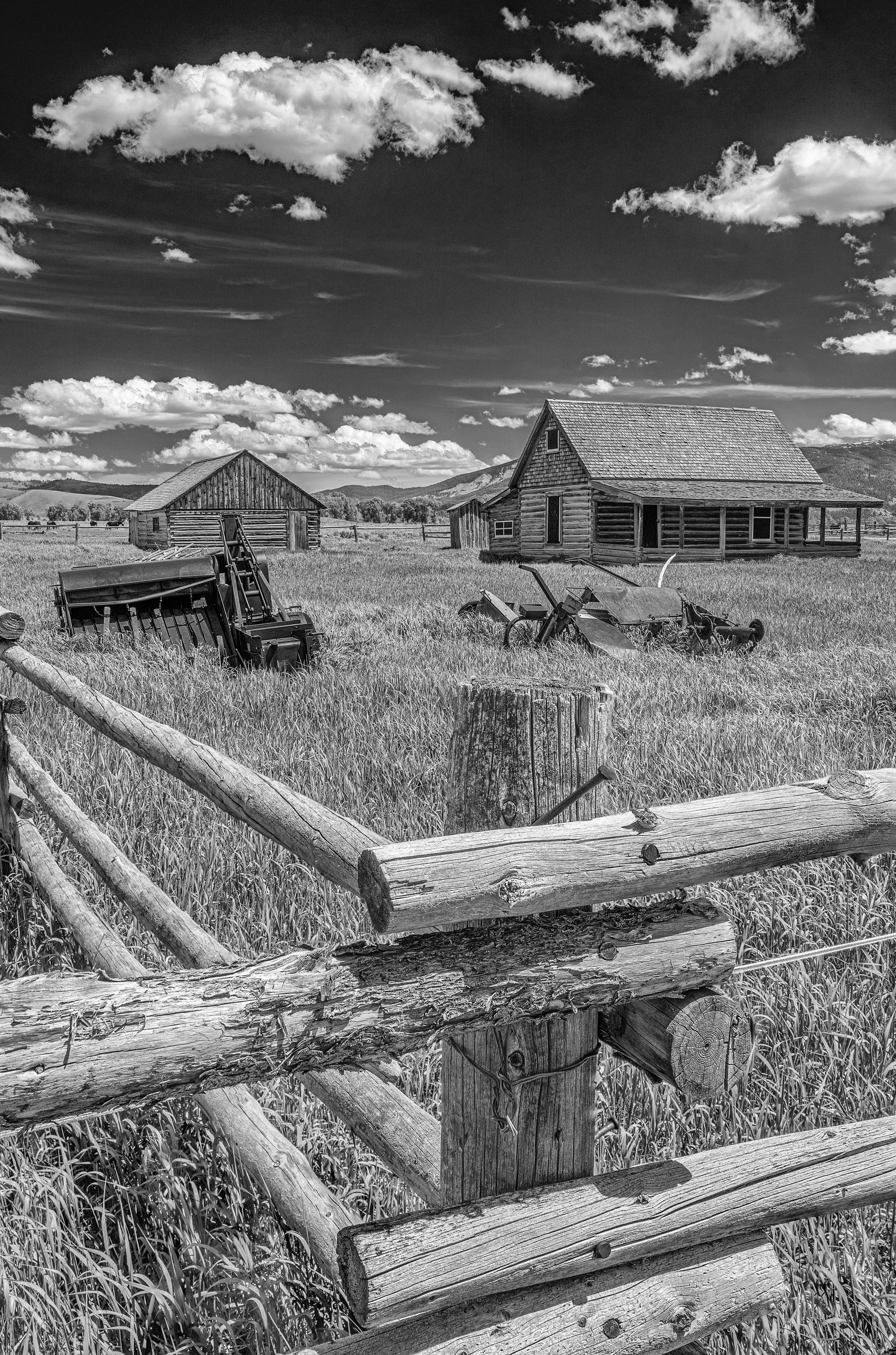
The Reed Moulton homestead was in use circa the 1920s, and then eventually abandoned some twenty or thirty years afterwards.
After a half an hour spent in total absorption photographing the swirling meadows, I began to sense a gradual warming. The sun had now emerged and was filling the clearing skies with a brilliant white light. I stood up and felt the welcoming rays against my weather-beaten face. Just in front of me sat other rusting farm implements buried amidst the grass and silhouetted against the now blazing sunlight. I smiled.
The Moulton Homestead had more to reveal. The Grand Tetons had more to reveal. Yellowstone lay just beyond.
I wouldn’t have enough time to see it all on this trip.
It’s not fair.
But I’ll just have to find a way to make it work.
More from the Moulton Homestead and Mormon Row
Notes:
*Alan Lomax (1915-2002) was an ethnomusicologist famous for making field recordings of traditional American folk music. You can visit his archives here: https://archive.culturalequity.org/
**Spaghetti Junction (officially known as the Kennedy Exchange) is the infamous conjunction of three major highways leading into Downtown Louisville: I-64, I-71, and I-65. Here’s a link to the Wikipedia page: https://en.wikipedia.org/wiki/Kennedy_Interchange