
A visit to Theodore Roosevelt National Park in early May 2025 only whetted my appetite to return in the first blush of autumn. Amidst the “desolate, grim beauty” of rugged buttes, golden cottonwoods and roaming herds, I briefly reflect on the history and creation of the park along with Roosevelt’s complicated legacy of conservation and racial attitudes.
“I have always said I would not have been President had it not been for my experience in North Dakota.”
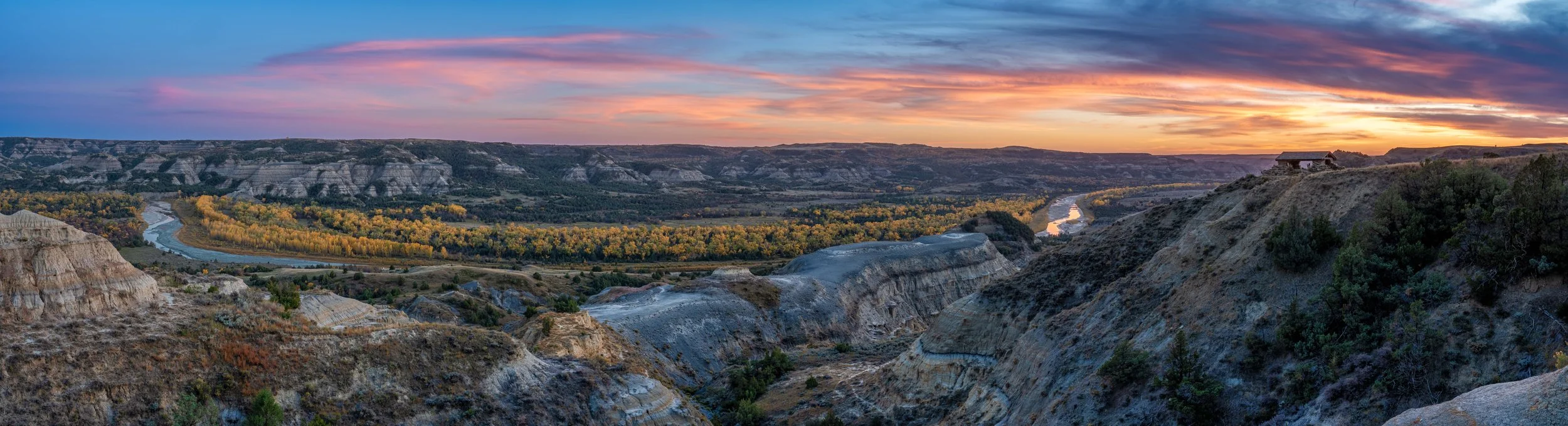
The Oxbow Bend in the Little Missouri River at sunset. On the crest of the butte to the right of the image sits the River Bend Overlook Shelter, a small structure made of wood and sandstone built in 1937 by the Civilian Conservation Corps.
"The river flows in long sigmoid curves through an alluvial valley of no great width. The amount of this alluvial land enclosed by a single bend is called a bottom, which may be either covered with cotton-wood trees or else be simply a great grass meadow. From the edges of the valley the land rises abruptly in steep high buttes whose crests are sharp and jagged. This broken country extends back from the river for many miles, and has been called always, by Indians, French voyageurs, and American trappers alike, the "Bad Lands"..." TR
The history of the development and dedication of Theodore Roosevelt National Park (henceforth TRNP) is actually quite long and “sigmoid” like the Little Missouri, as consideration for setting aside land in honor of our 26th President began almost immediately after his death in 1919 but didn’t gain momentum until the Great Depression. Part of the challenge involved securing a suitable location since Roosevelt himself in the mid-1880s had owned two ranches in the Dakota Territory several miles apart, only to conclude that cattle grazing was economically unsustainable due to the precarious climate. He fully divested his holdings by 1898, though he would continue to visit and hunt in the area throughout his Presidency.
After existing as a jointly managed entity with both state and federal agencies serving in various capacities of oversight, what would become known as the Theodore Roosevelt National Memorial Park began to take shape at the end of the 1940s. President Carter signed into law what is now called Theodore Roosevelt National Park in 1978.
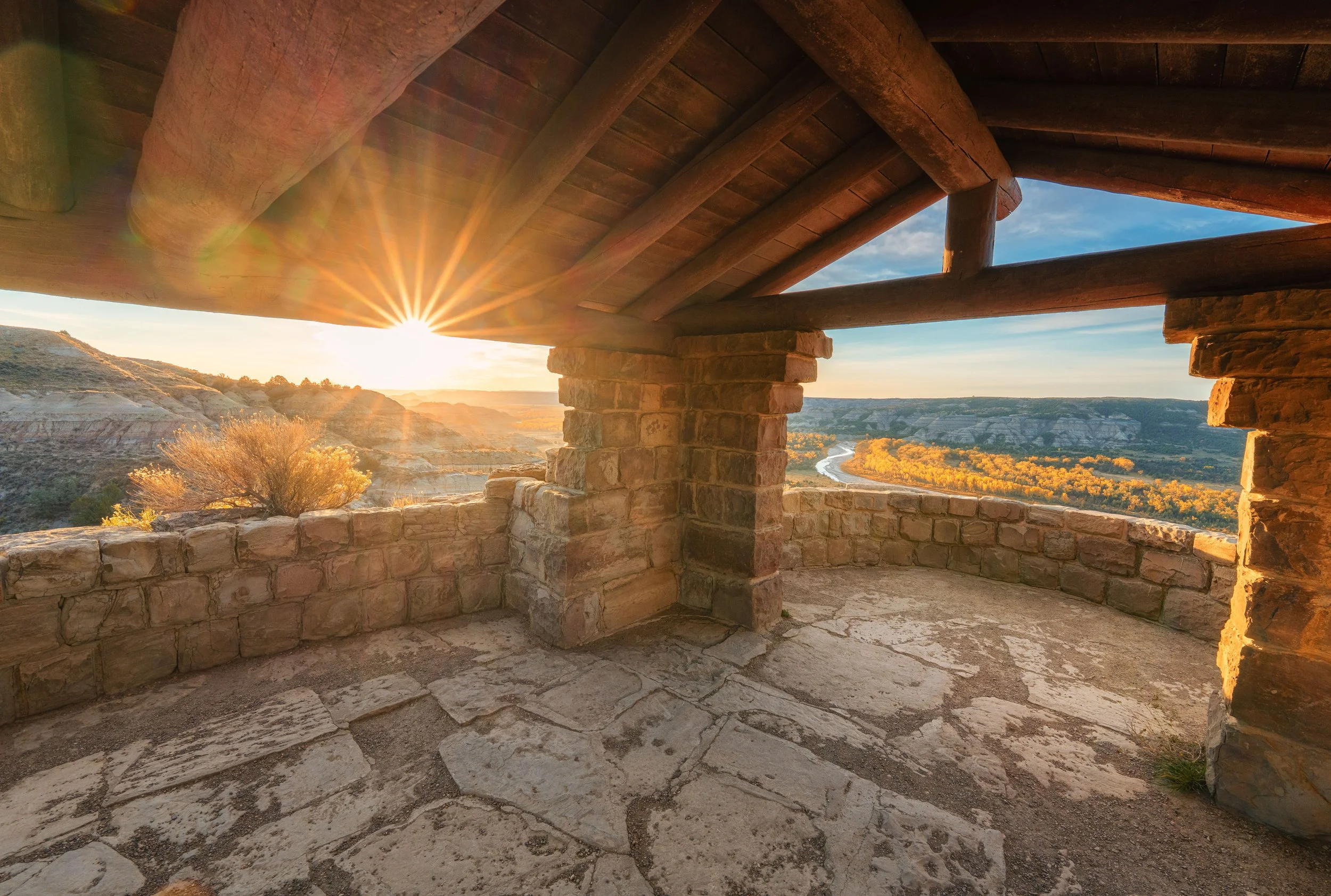
Sunrise from the shelter provides a sweeping view the golden cottonwoods that line the banks of the Little Missouri River.
TRNP is divided into two sections, the South Unit and the North Unit. The North Unit is where the Overlook Shelter is located, and is the more remote of the two entrances. (*There is a third section, the Elkhorn Ranch, which is even more remote and accessible only during certain times of the year. I’ll comment on it near the end of this post.)
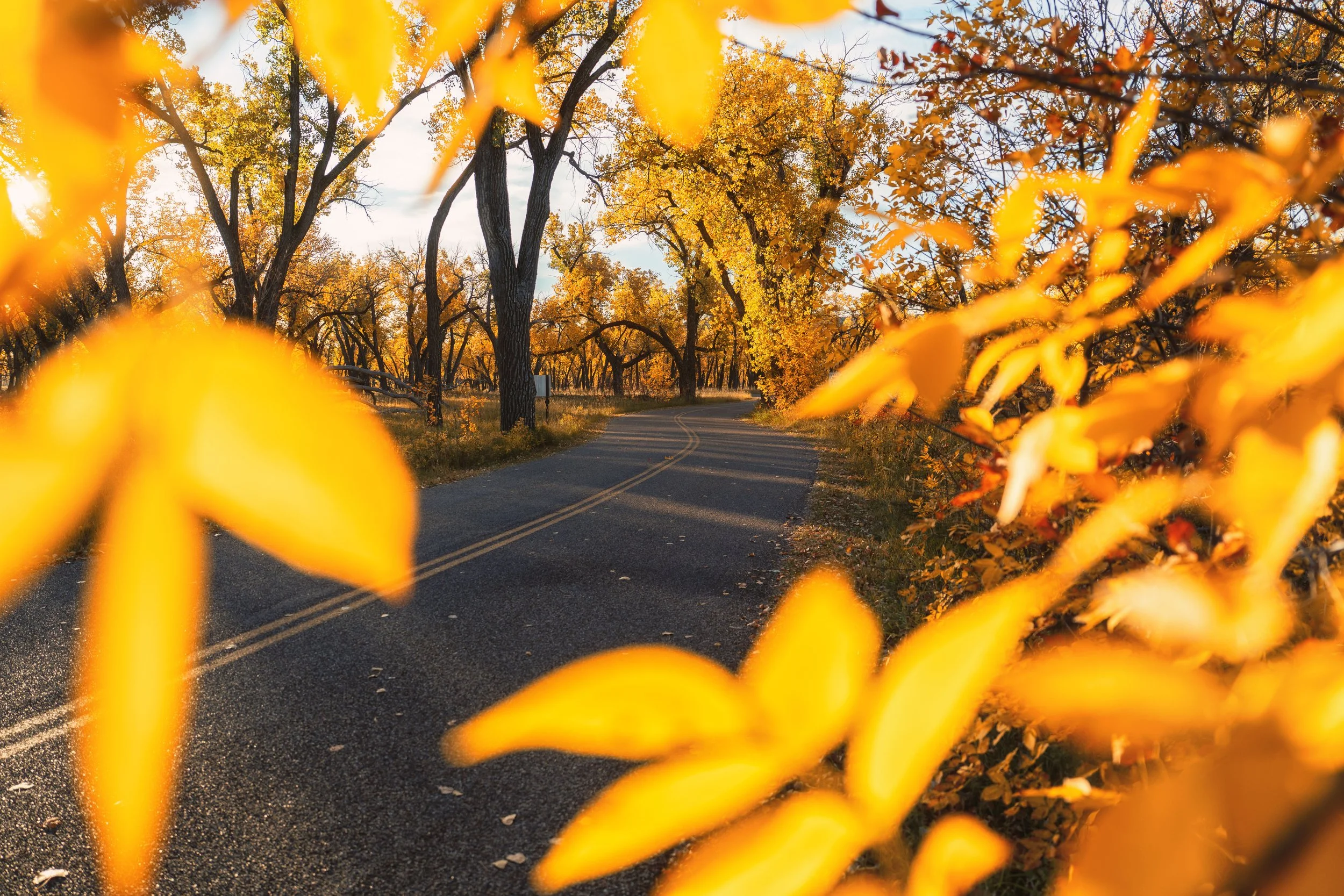
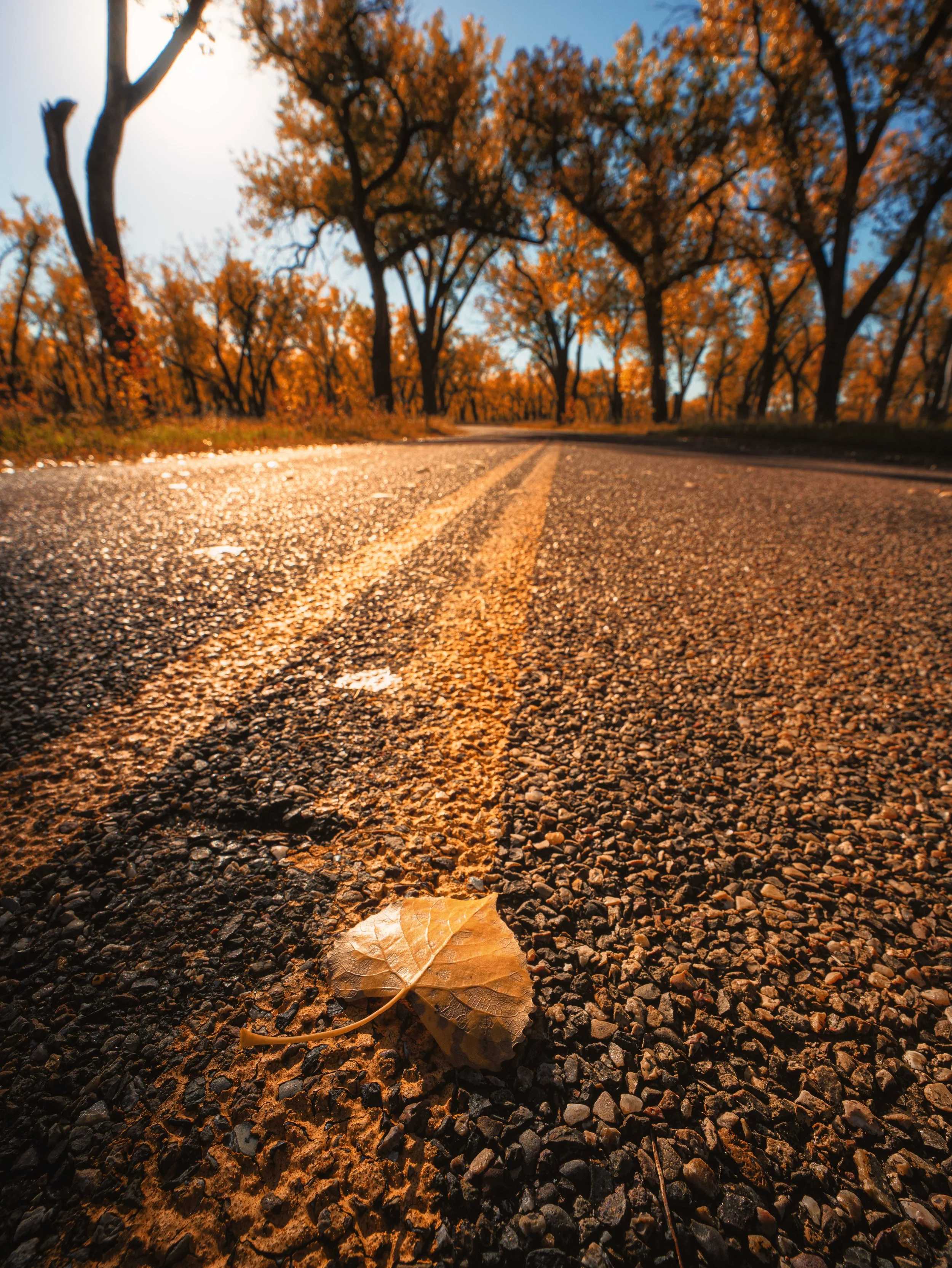
The road through Juniper Campground.
There are two campgrounds in the park, one for each unit, but Juniper located in the North is by far the more picturesque.
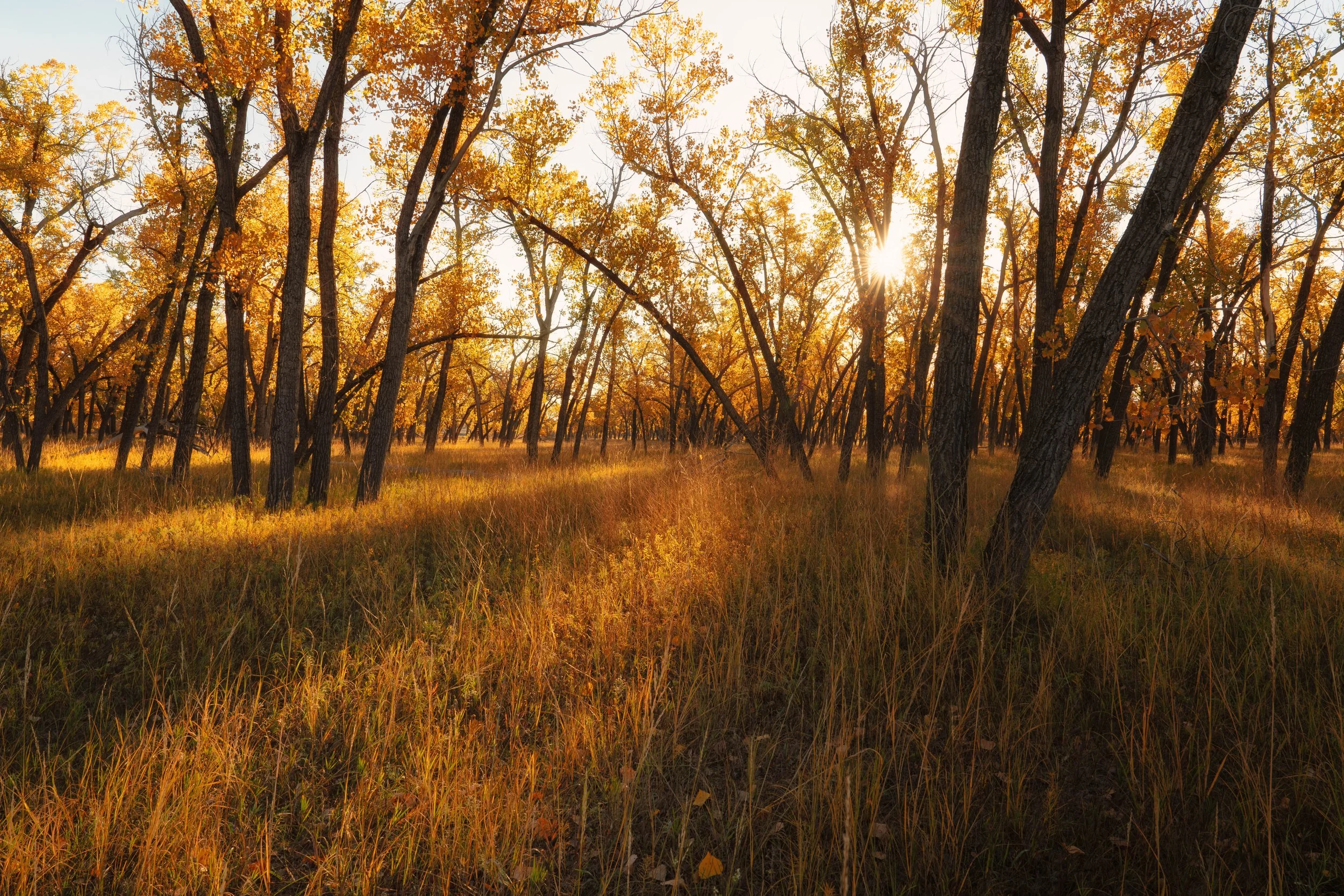
The meadow at Juniper at sunrise. One can follow this open expanse down to a wilderness trail along the Little Missouri River.
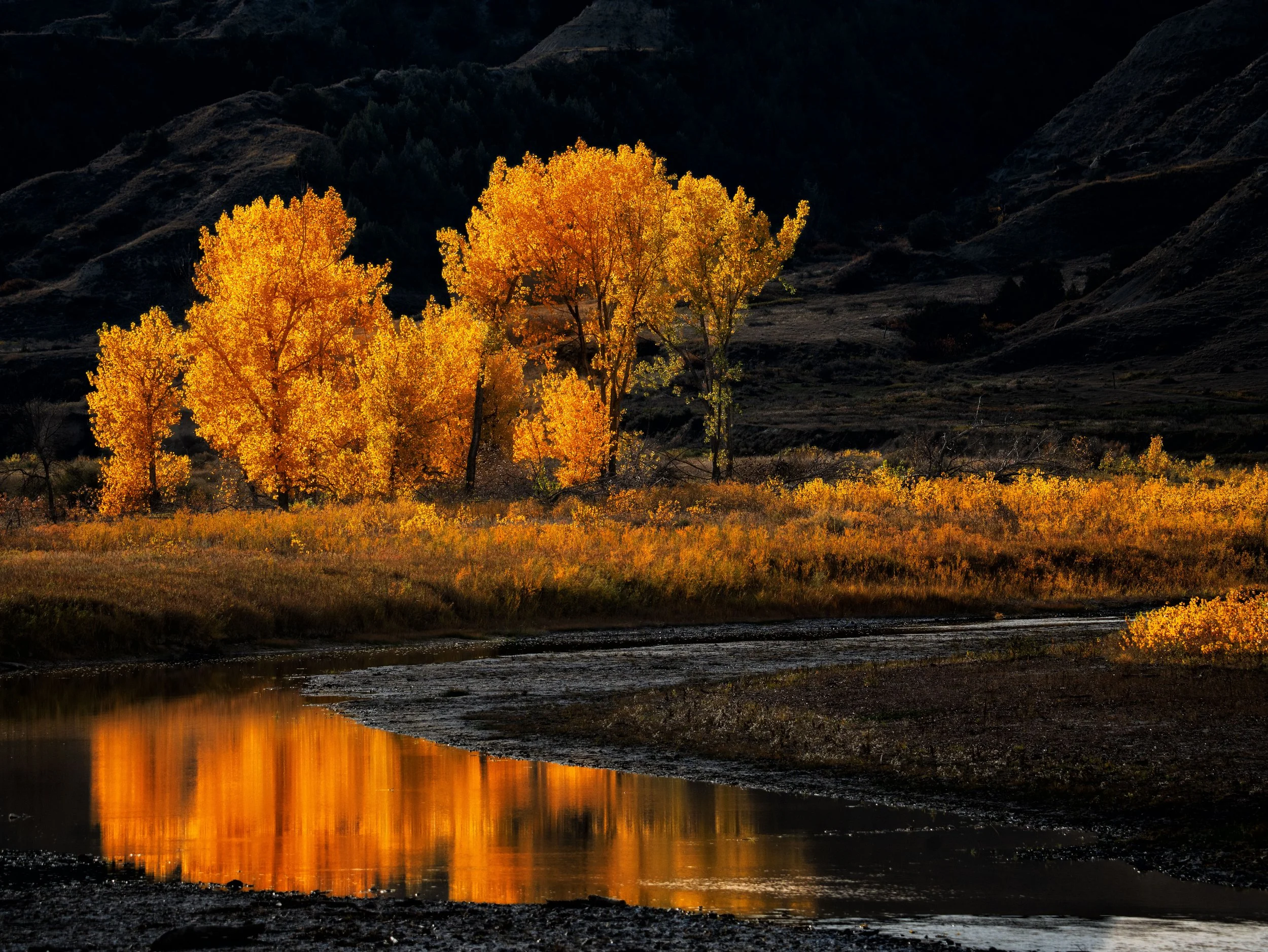
A grove of elms glow in the golden hour along a bend in the Little Missouri River in the South Unit.
"I grow very fond of this place, and it certainly has a desolate, grim beauty of its own, that has a curious fascination for me."
The South Unit is the more visited of the two main sections of the park, and certainly the more varied when it comes to wildlife, topography and items of historical interest.
Much of the land dedicated for preservation in the park originally was the hunting grounds for the Mandan, Hidatsa and Crow, among other indigenous communities. The Lakota Sioux later pushed into the Little River Basin seeking territorial domination in the mid 1800s before clashing with the US Army after gold had been discovered in 1868. Further discoveries in 1874 brought a flood of prospectors and settlers into the Black Hills, eventually leading to the Battle of Little Big Horn in 1876 and later the Battle of Wounded Knee in 1890.
Roosevelt first visited the Dakota Badlands in 1883 on a hunting expedition for bison. By that time most of the native populations had been forcibly resettled onto reservations leaving the prairies open for grazing, though it wouldn’t be long until private entities began buying up land for cattle ranching. Roosevelt’s acceleration of the General Allotment Act of 1887 (also known as the Dawe’s Act) helped to further displace native populations through the creation of numerous reservations during his time as President.
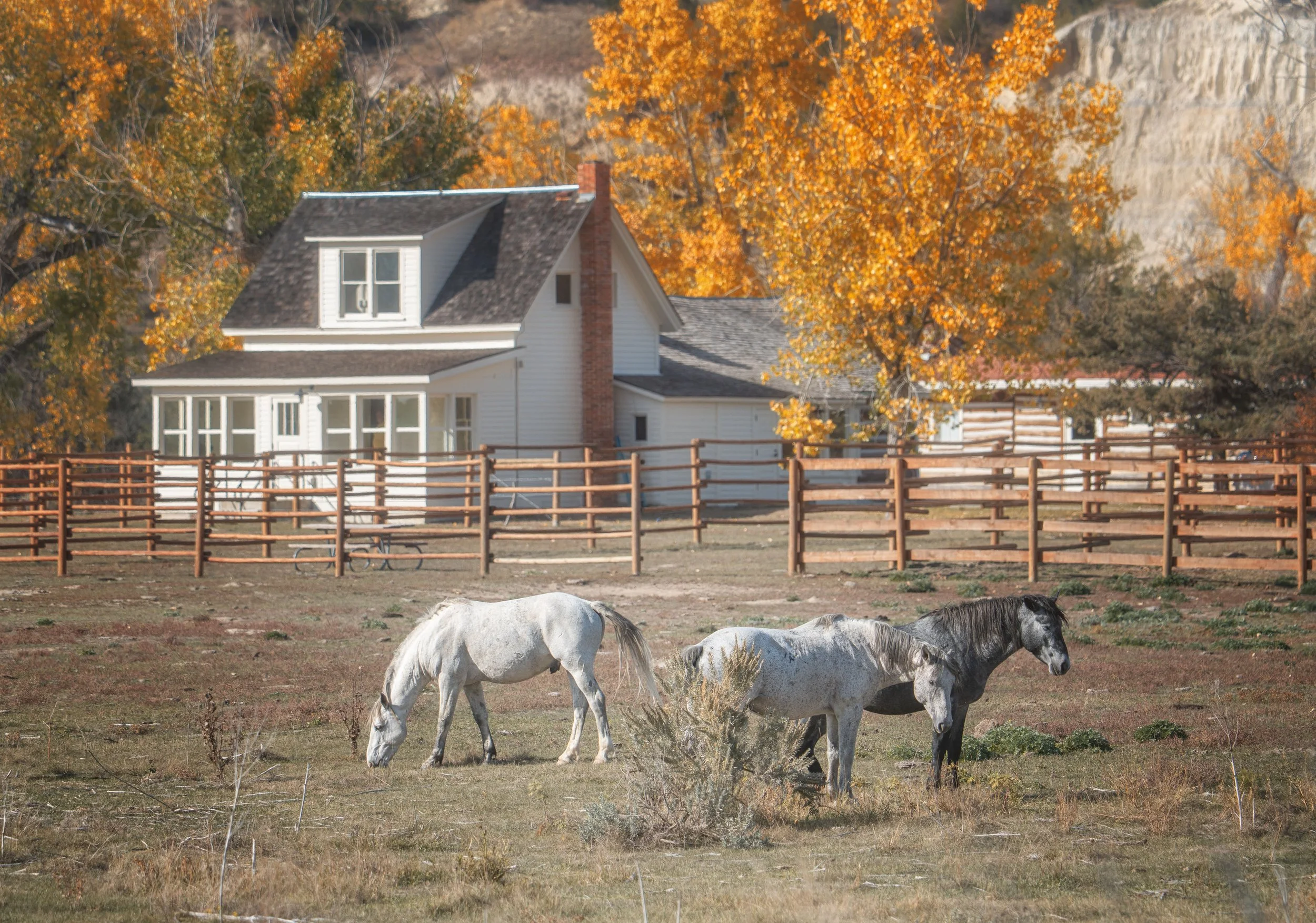
Wild horses grazing in front of Peaceful Valley Ranch.
"I do not believe there ever was any life more attractive to a vigorous young fellow than life on a cattle ranch in those days. It was a fine, healthy life, too; it taught a man self-reliance, hardihood, and the value of instant decision...I enjoyed the life to the full."
The main building of Peaceful Valley Ranch is the only original structure remaining in the South Unit. It sits just off the Scenic Drive and at any point can have turkeys, bison and horses lingering in the meadow located directly in front of the property. This parcel has been in existence since the late 1880s, though records are sketchy due to the fact that the land was never legally owned or registered. The ranch served various functions and exchanged hands multiple times throughout the 20th century. It last served as a concessionaire where people could take horse rides throughout the park, though that ended in 2014. Its future is still undetermined.
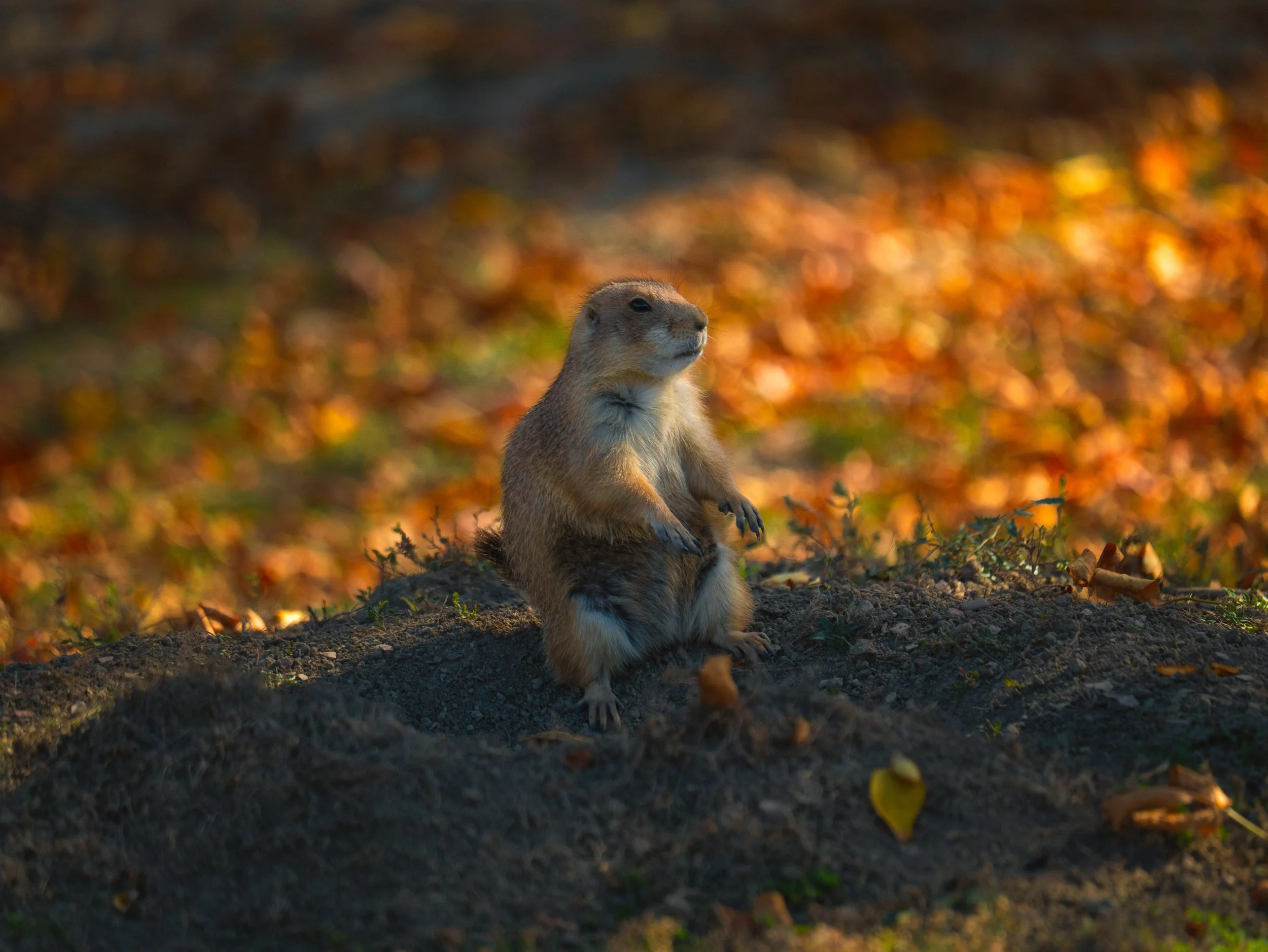
"Prairie-dogs are abundant...; they are in shape like little woodchucks, and are the most noisy and inquisitive animals imaginable. They are never found singly, but always in towns of several hundred inhabitants; and these towns are found in all kinds of places where the country is flat and treeless."
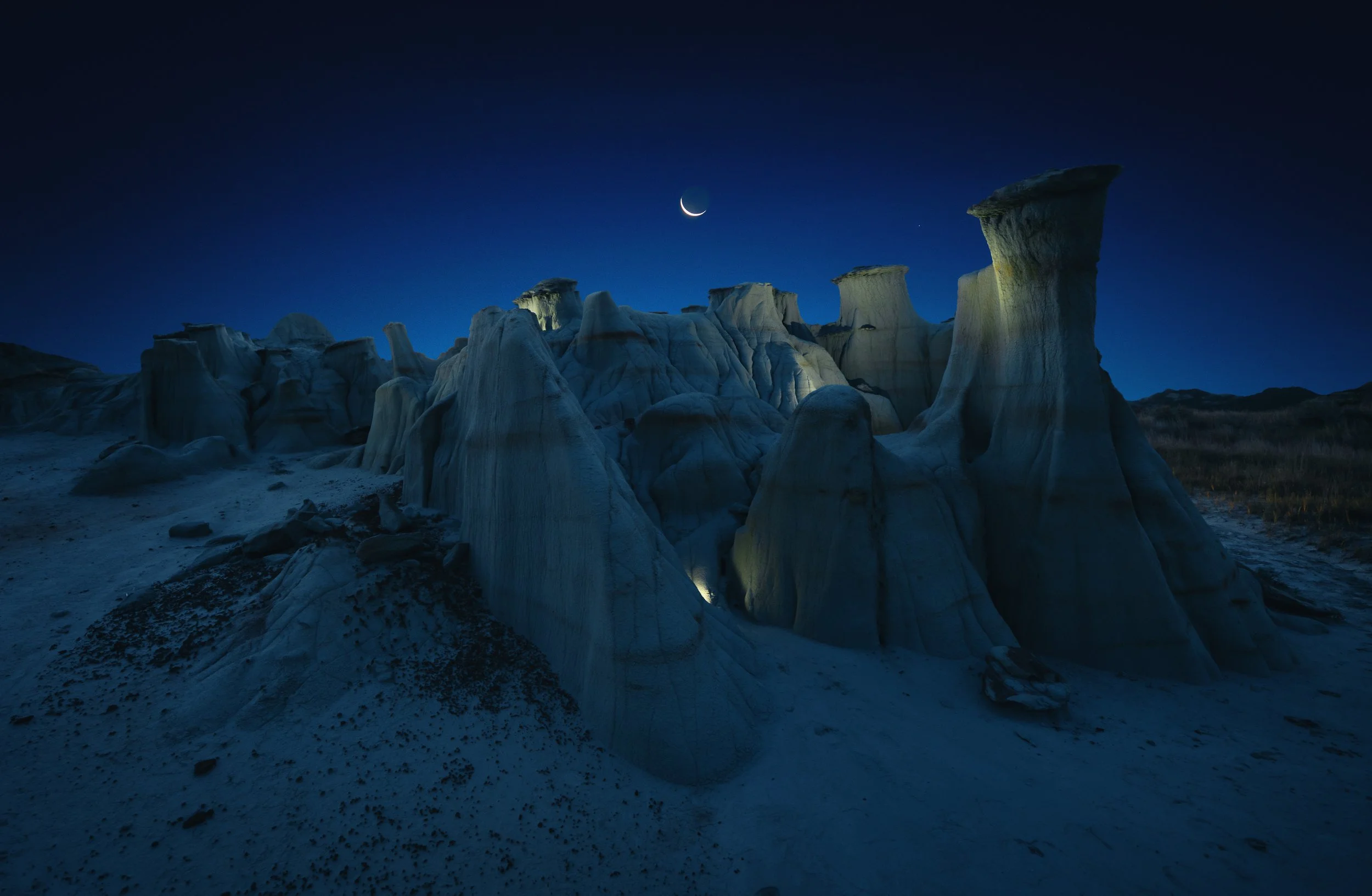
Moonrise over a small collection of hoodoos.
"After nightfall the face of the country seems to alter marvelously, and the clear moonlight only intensifies the change. The river gleams like running quicksilver, and the moonbeams play over the grassy stretches of the plateaus...The Bad Lands seem to be stranger and wilder than ever, the silvery rays turning the country into a kind of grim fairyland."
Though primarily known for its rolling hills and buttes, TRNP does have a few sections of hoodoos and bizarre “cannonball” formations of scattered throughout its 70,000 plus acres. The two images seen here are located just off Scenic View Drive and are directly next to each other. They were also the scene of an amazing experience for me at sunrise (see below).
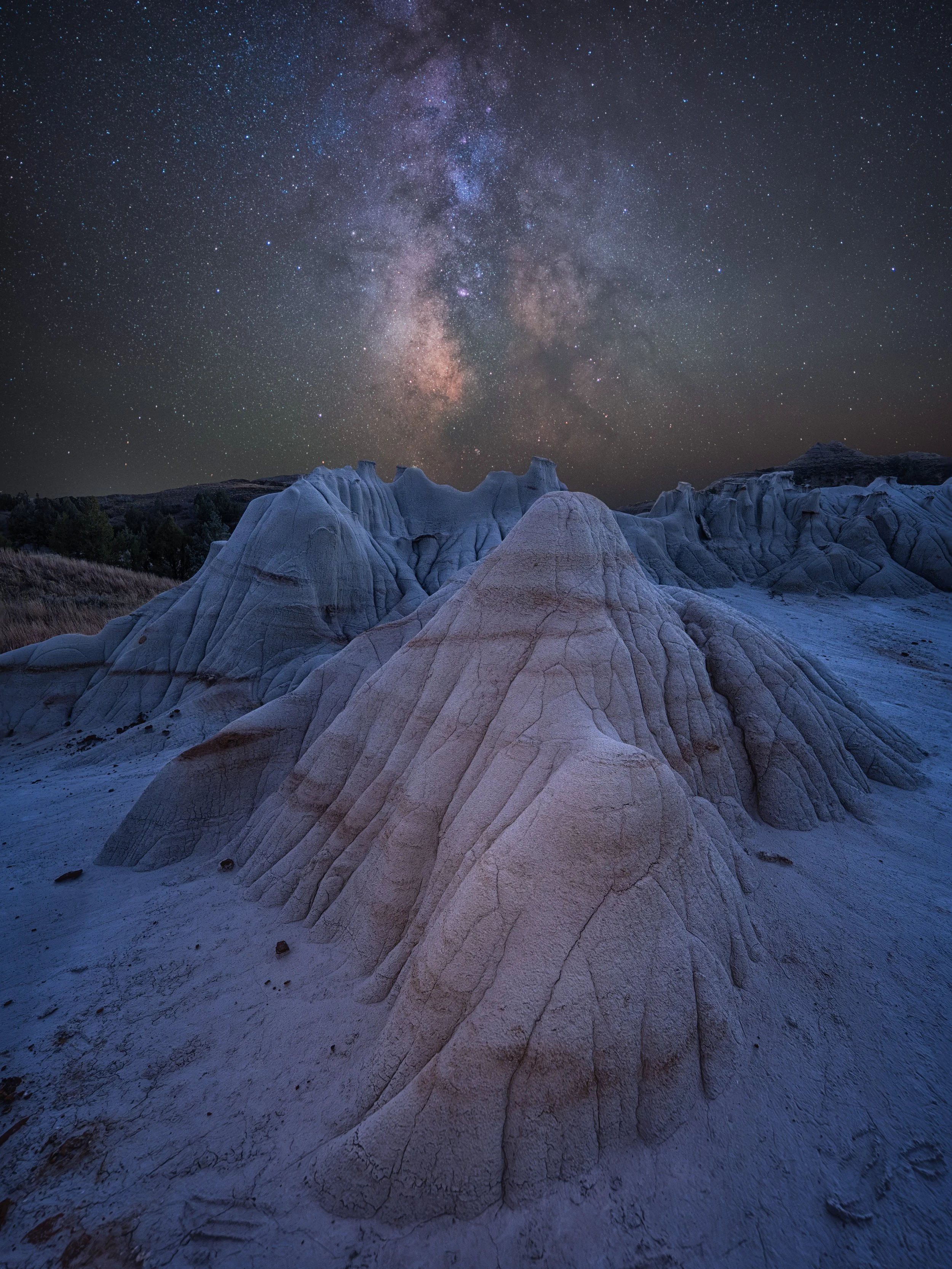
The last gasp of the Milky Way could be seen over another small archipelago of hoodoos during my visit in early October.
"The beauty and charm of the wilderness are his for the asking, for the edges of the wilderness lie close beside the beaten roads of the present travel."
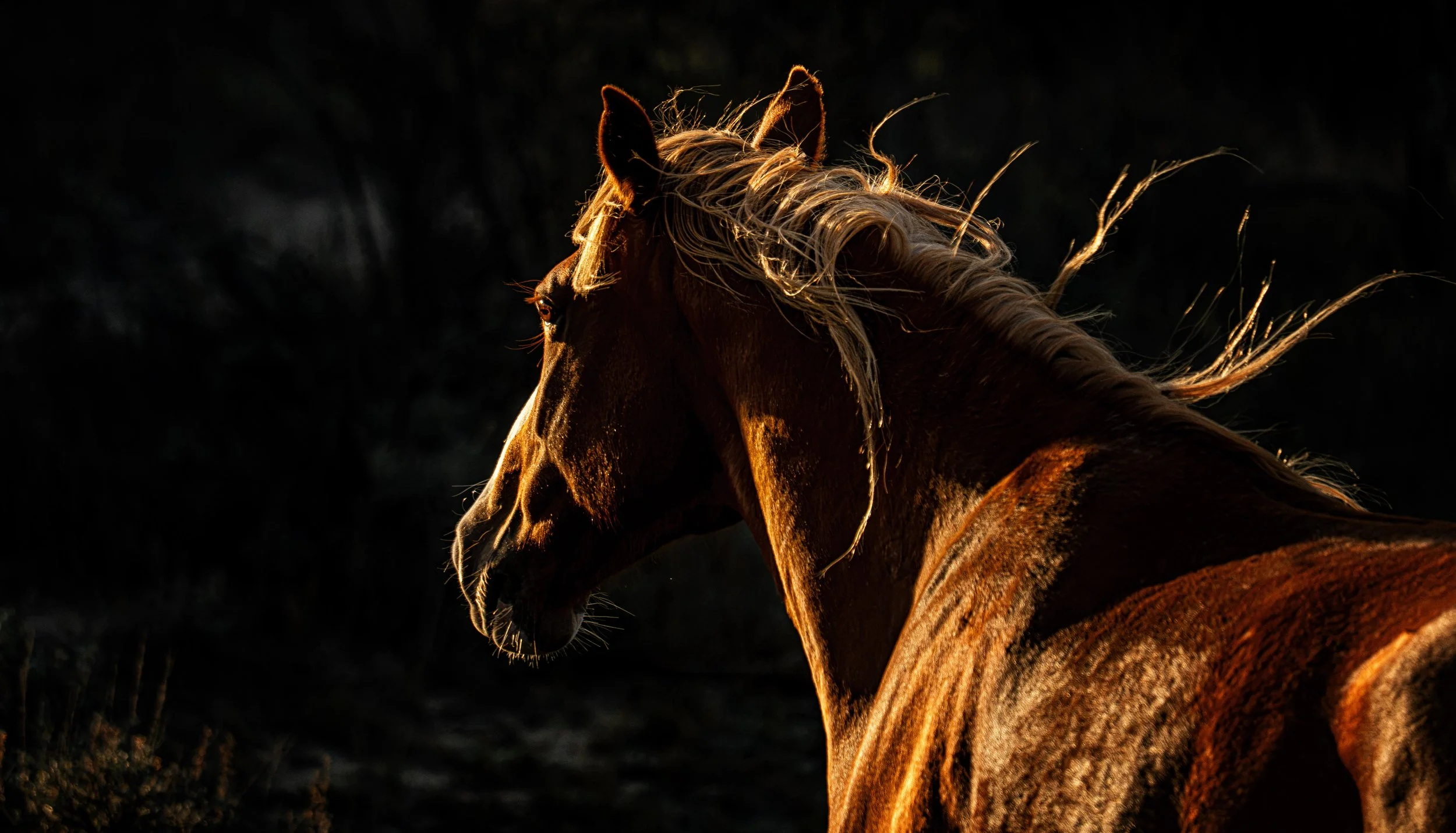
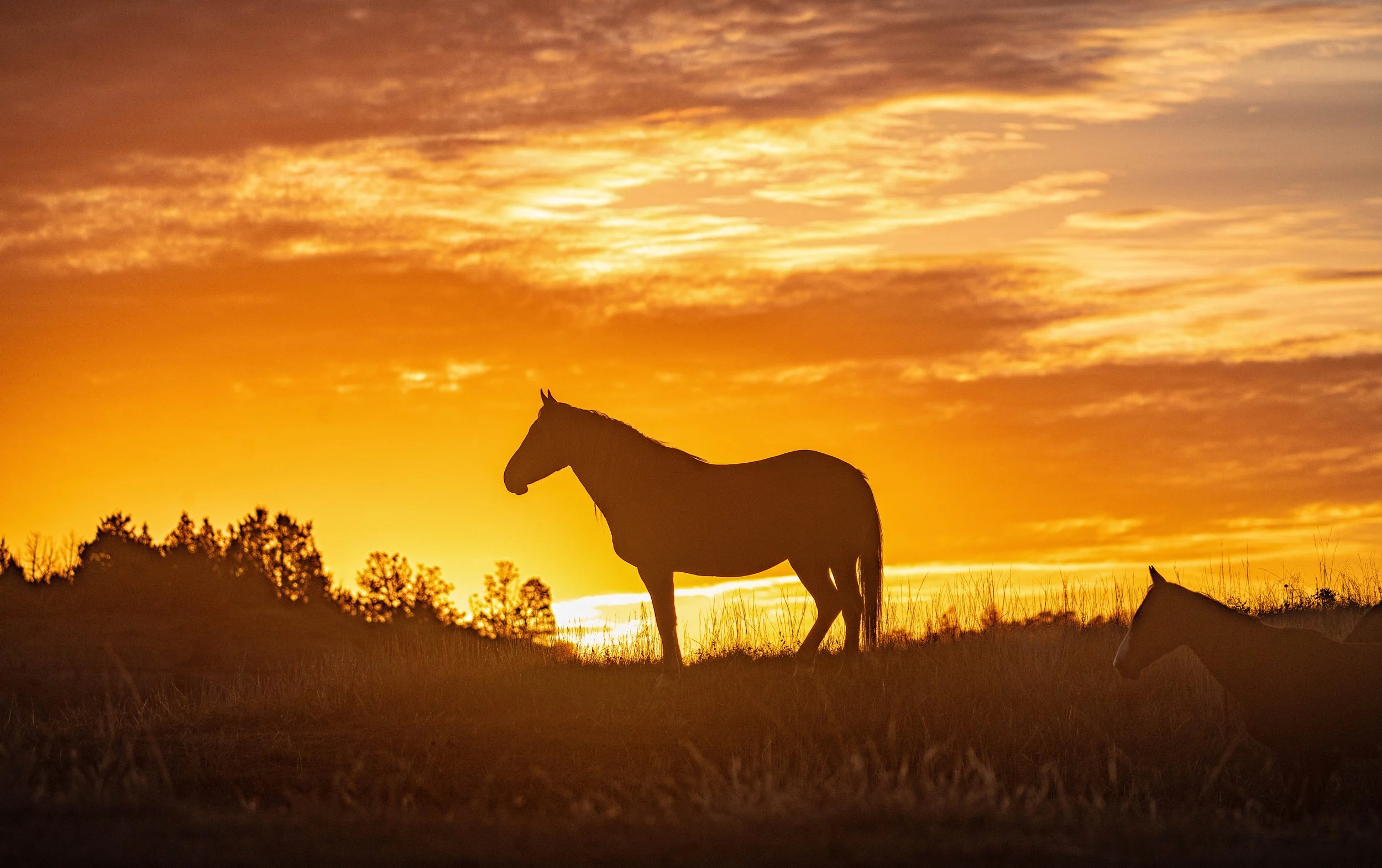
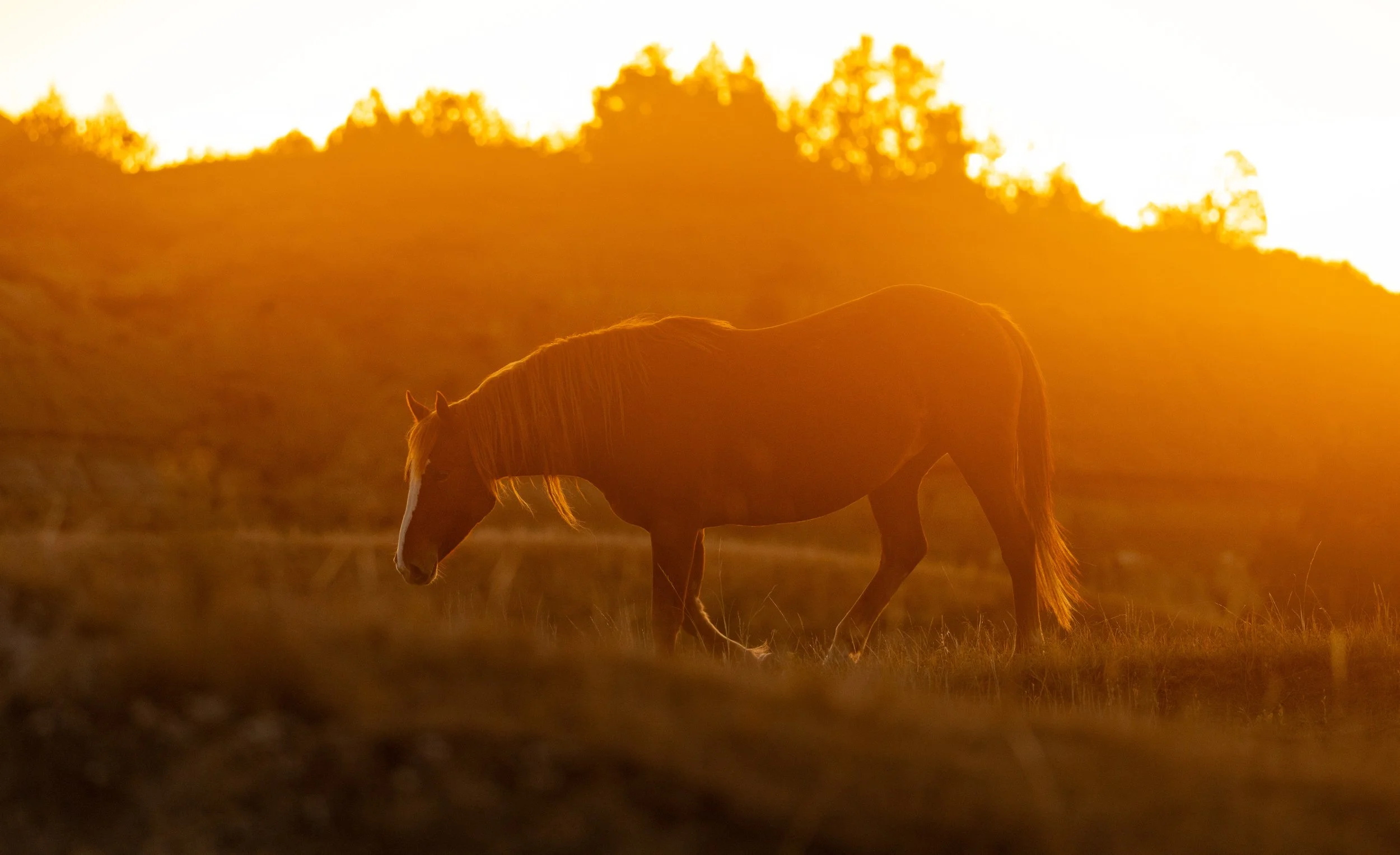
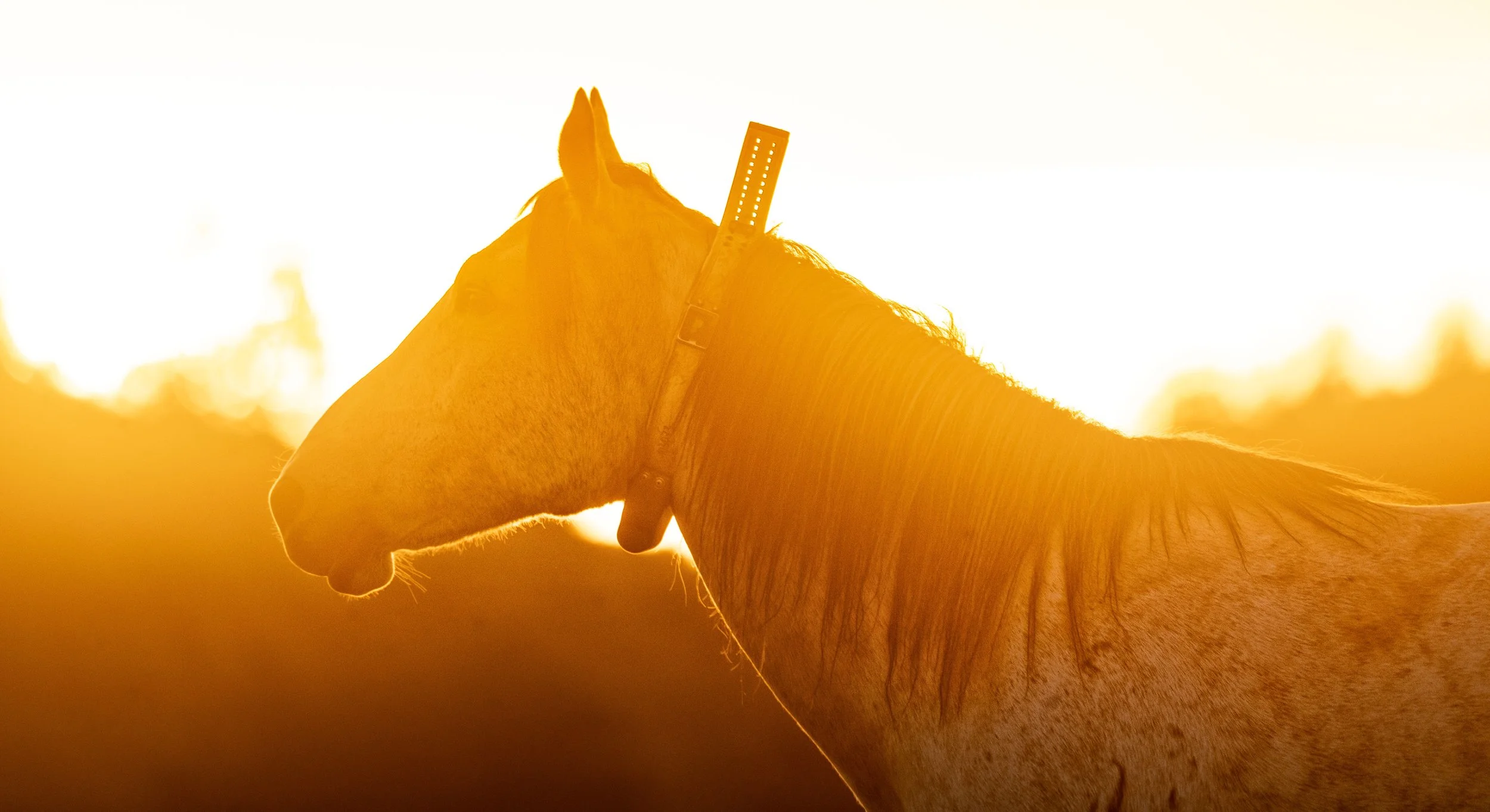
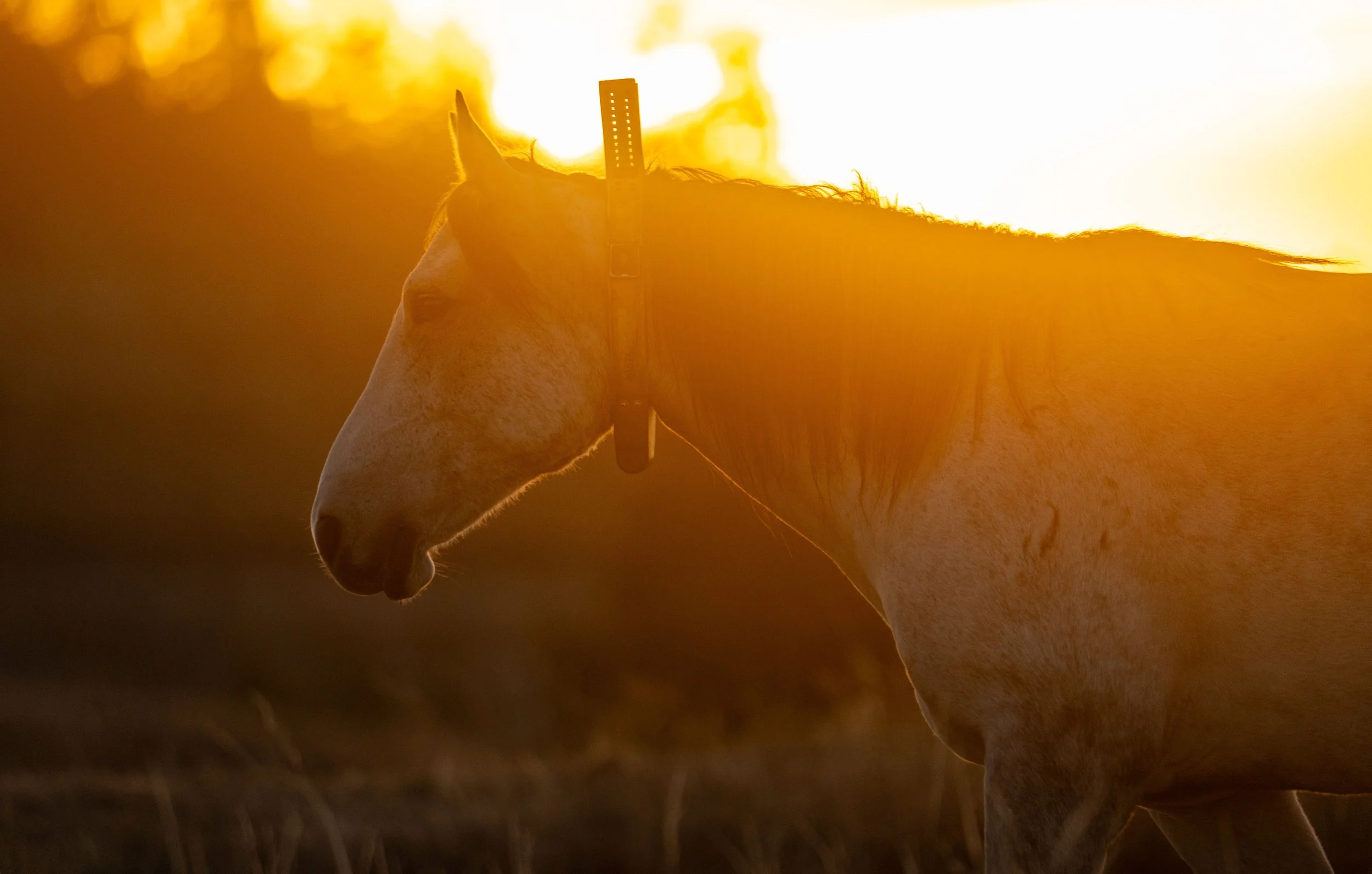
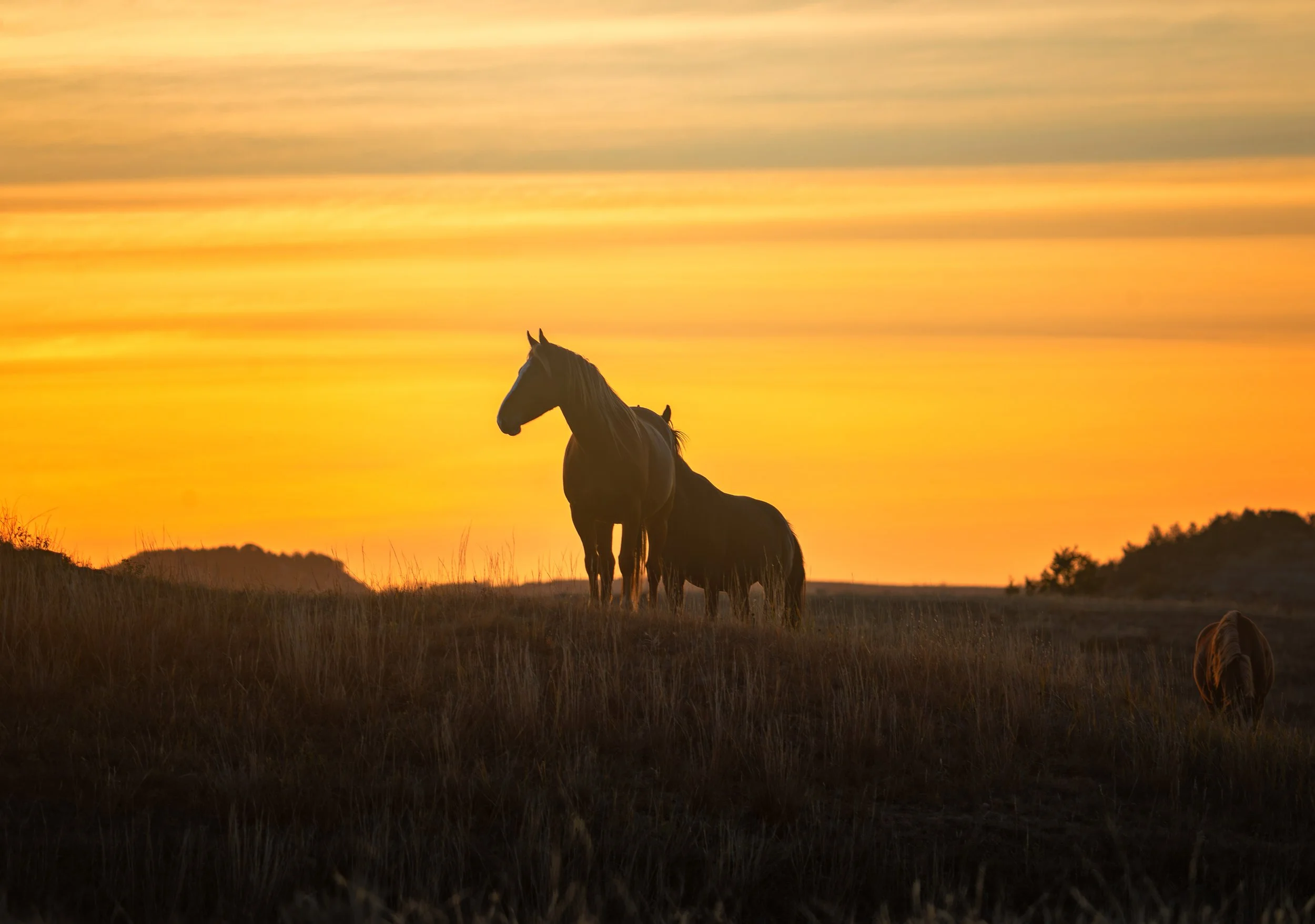
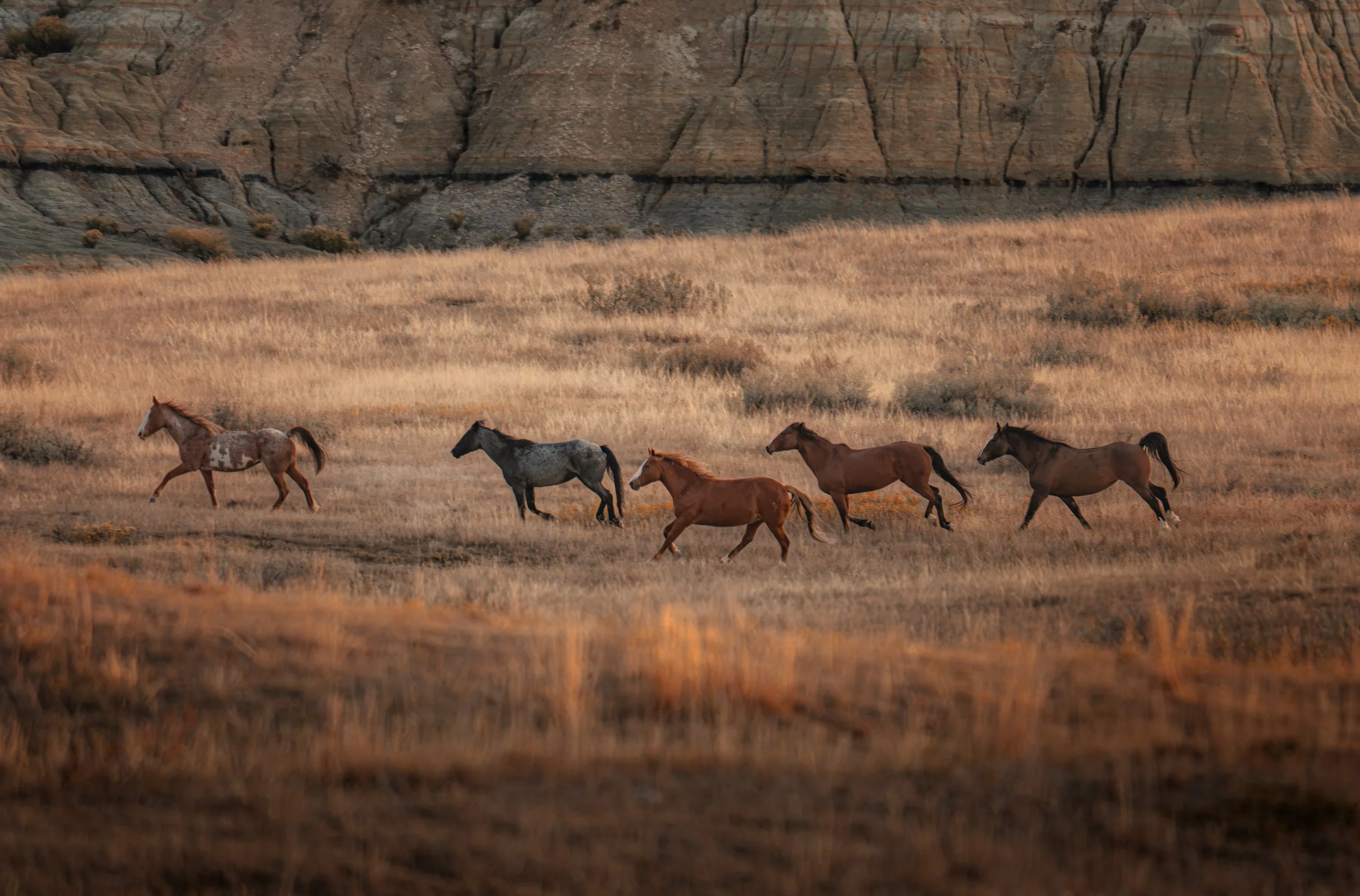
“...It is now 6:30 a.m. The liminal space in the sky begins to widen and the first signs of daylight stretch across the small escarpments surrounding me. Just over the ridge to my right I detect movement, and as I approach I hear grunting. Cautiously I step to the edge and lift myself just enough to see the brown shag of a bison’s back, slowly advancing up the hillside between me and my car. It is unaware of my presence, which is all the better. I quickly retreat back to my work.
It is now almost 7 a.m. Sunrise is imminent. Suddenly more grunting, but this time it is not beside me or behind me. It is in front of me. I am a mere twenty yards from the road, with only the hoodoos to keep me safe from the possible stampede of whatever lies just beyond. Warily I step around and again ascend the bowl.
Perhaps they had been running all night, free to follow the asphalt ribbon that they had internalized as just another path blazed by their forebears and without the intrusion of the shiny behemoths carelessly blocking their jaunts. It had not occurred to me until this very moment that I was now part of their landscape, a curiosity to observe and then to ignore. We met at the summit of the small hill just next to the road. I stumbled to affix the heavy lens as the horses and I came to an improvised agreement: we will stand here in the glory of the morning light and you will keep your distance. It was just enough, until they broke the truce first. They veered off towards the valley and down along the trench leading to another trail.”
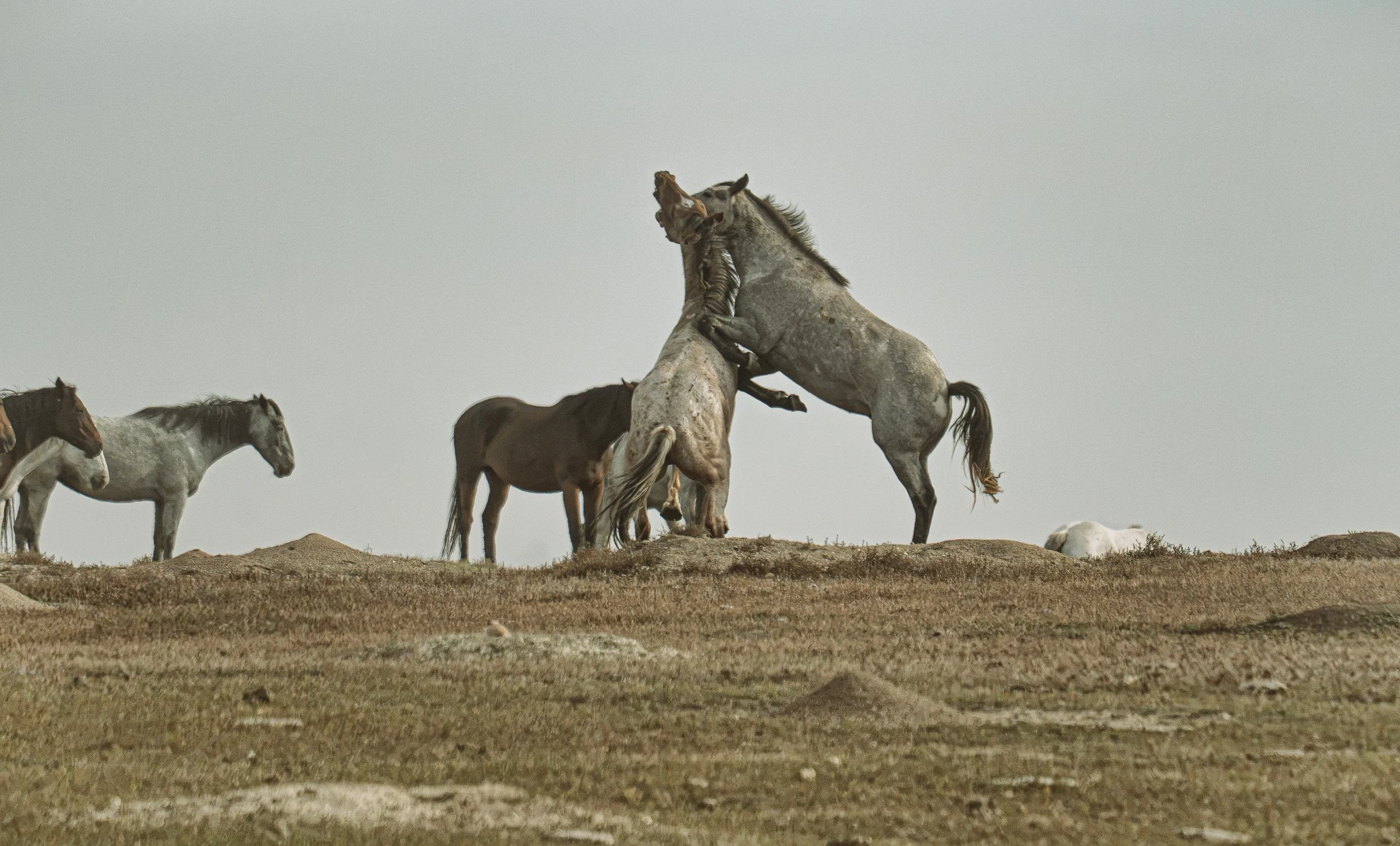
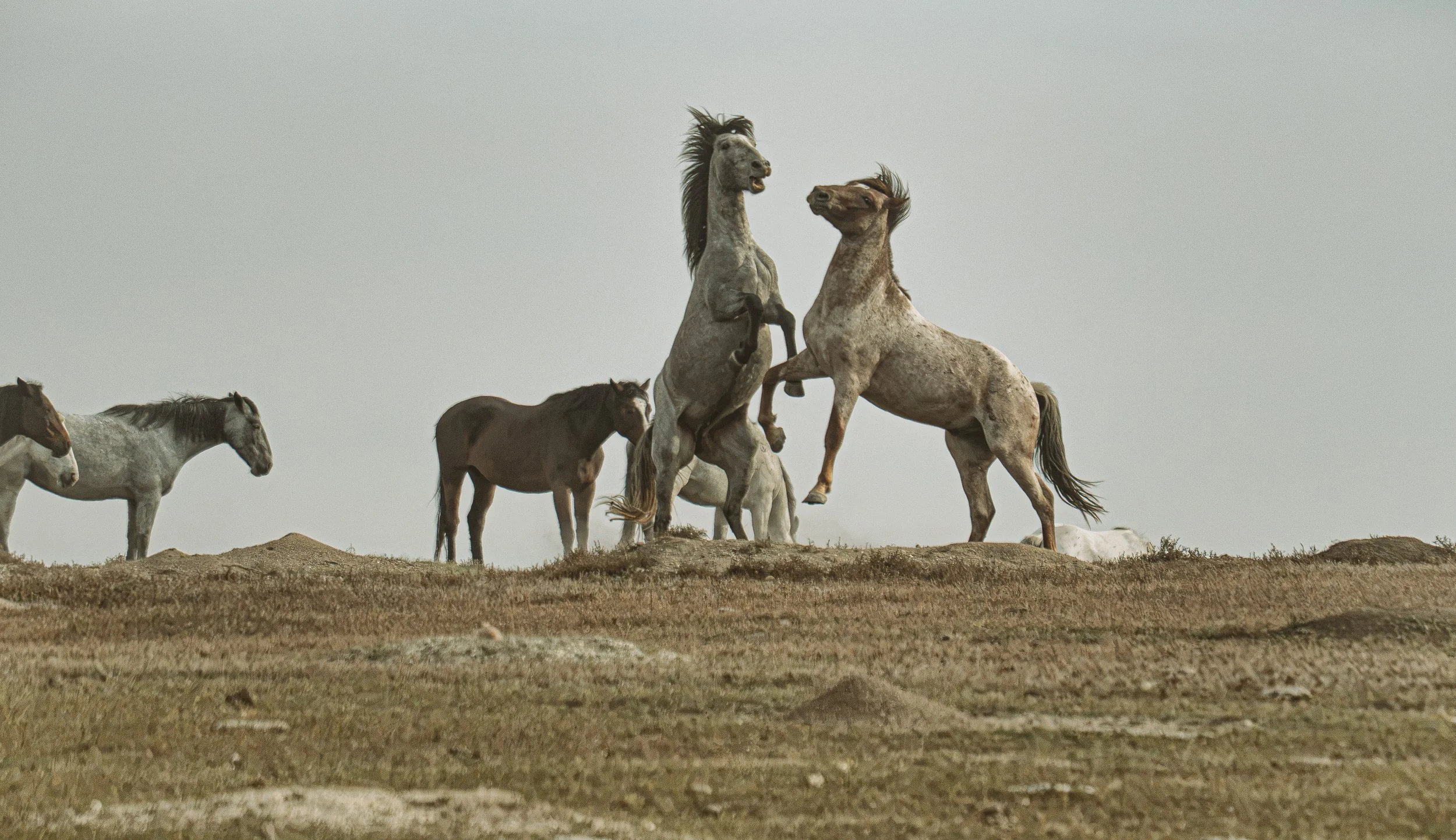
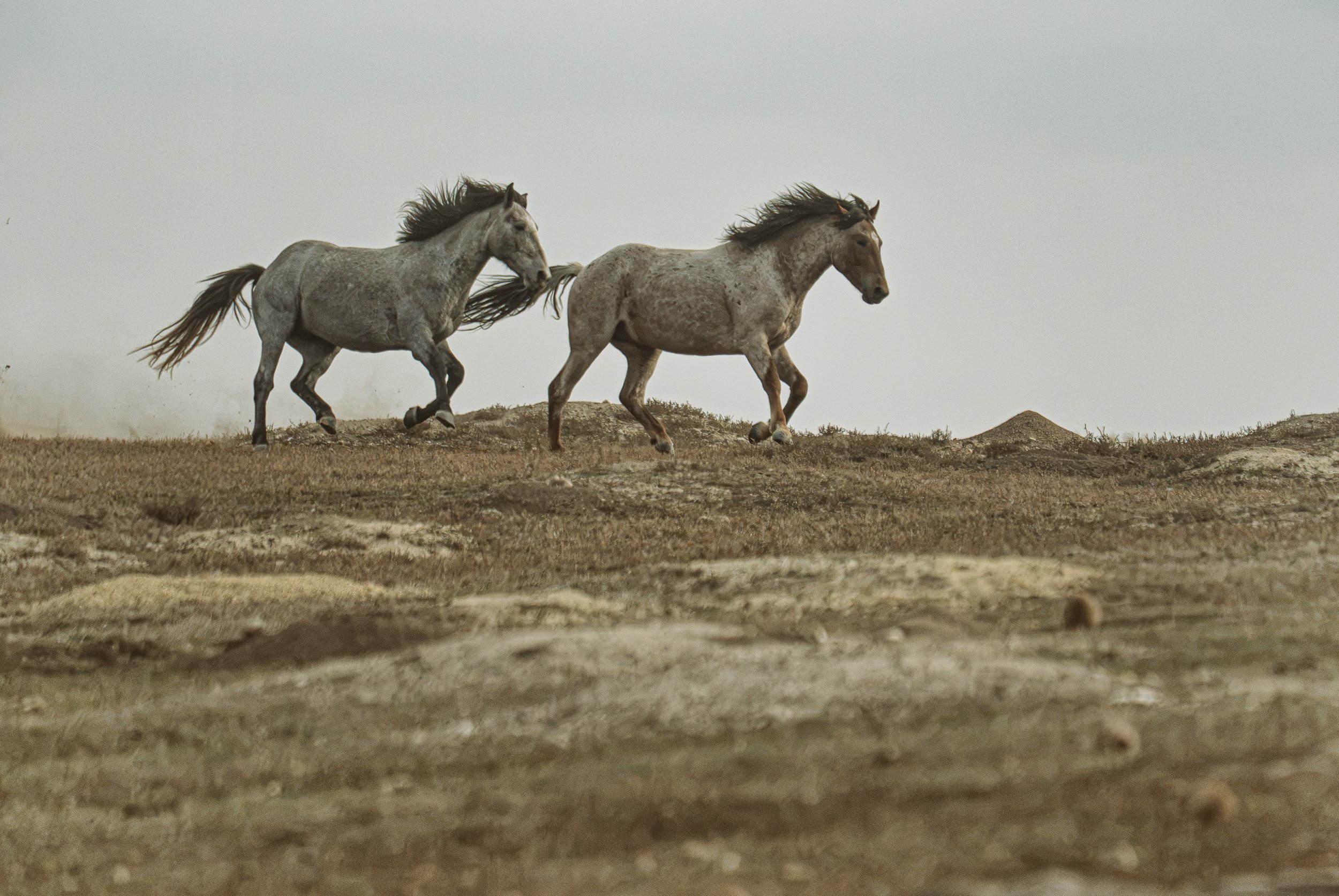
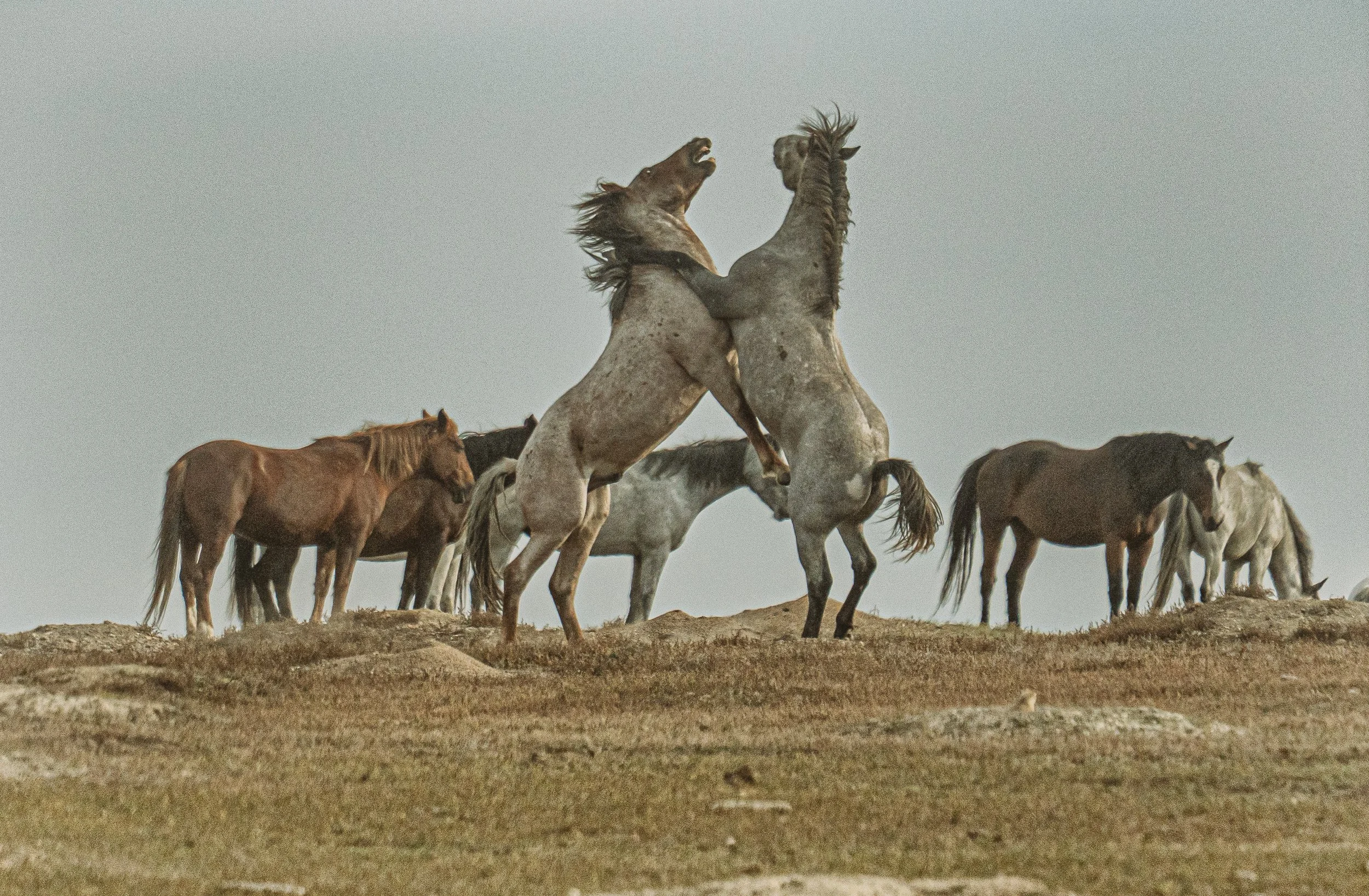
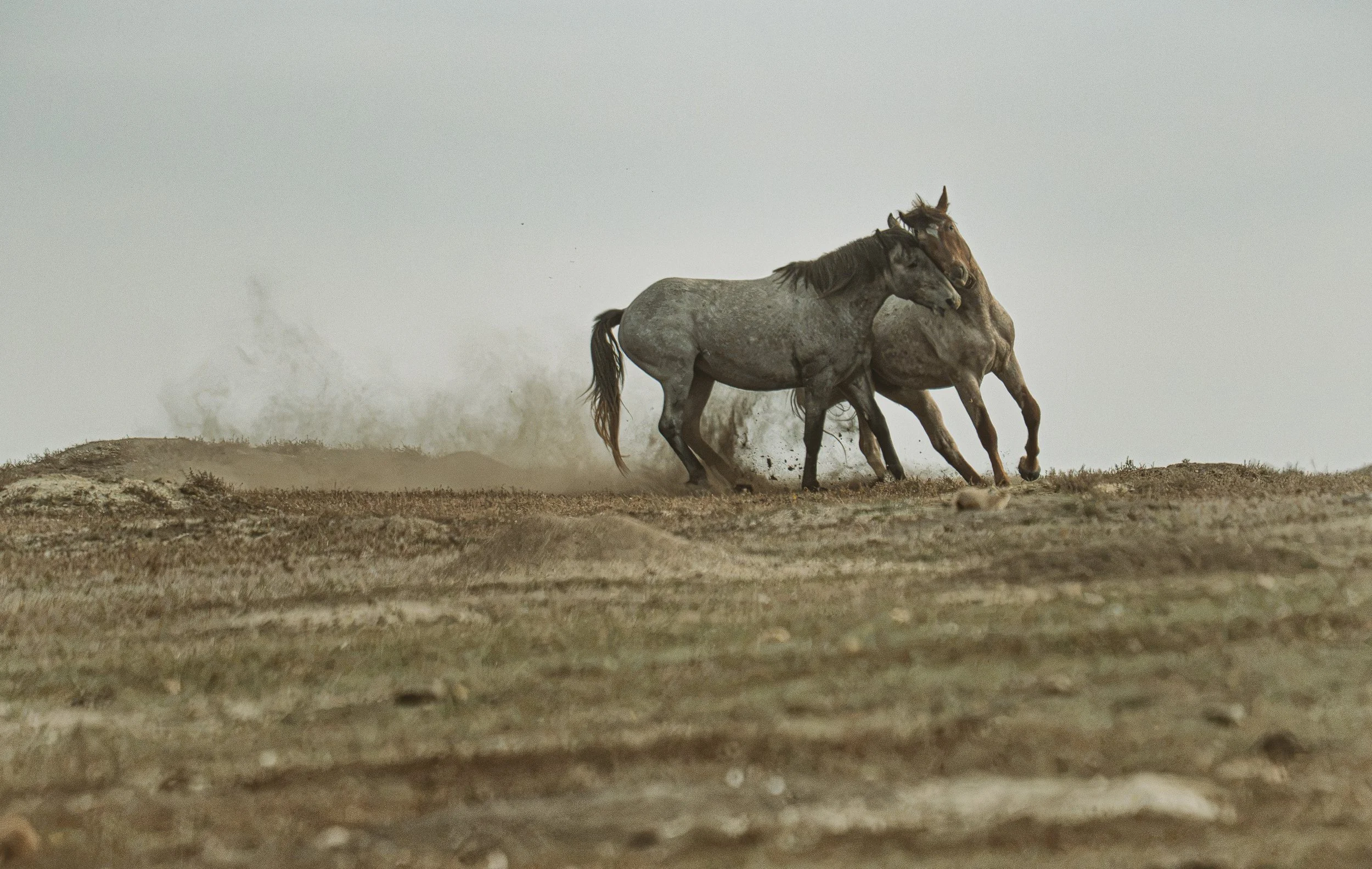
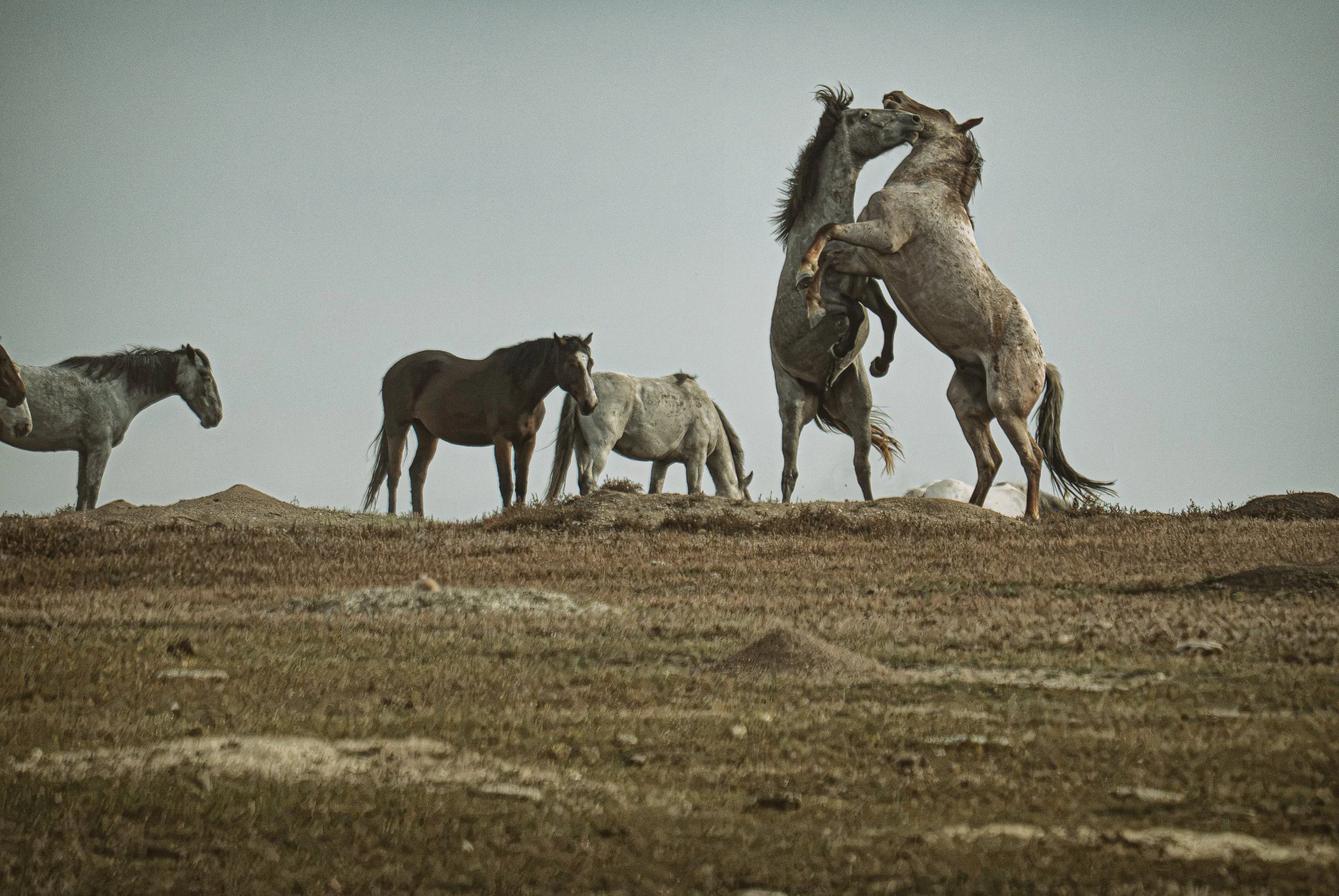
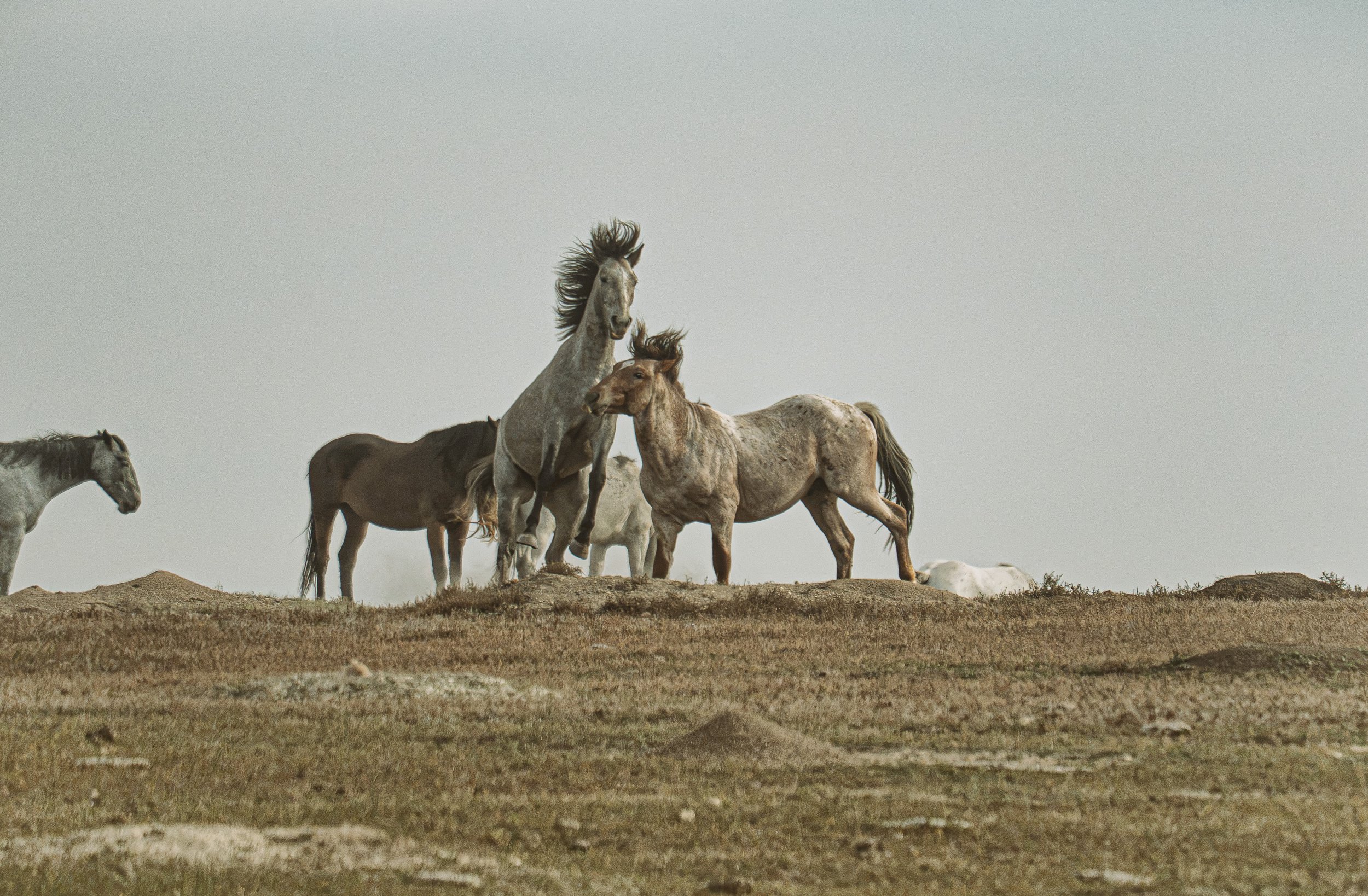
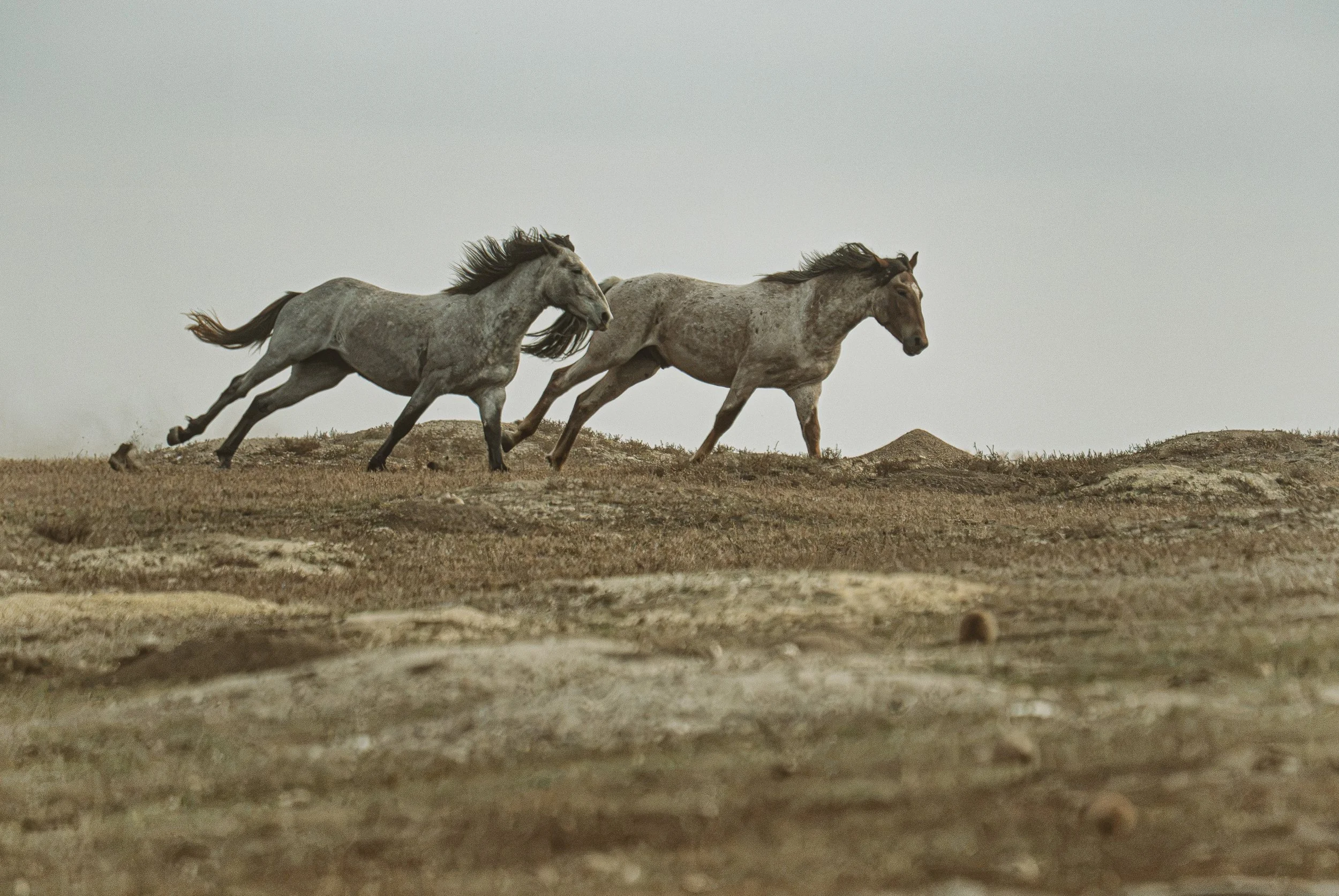
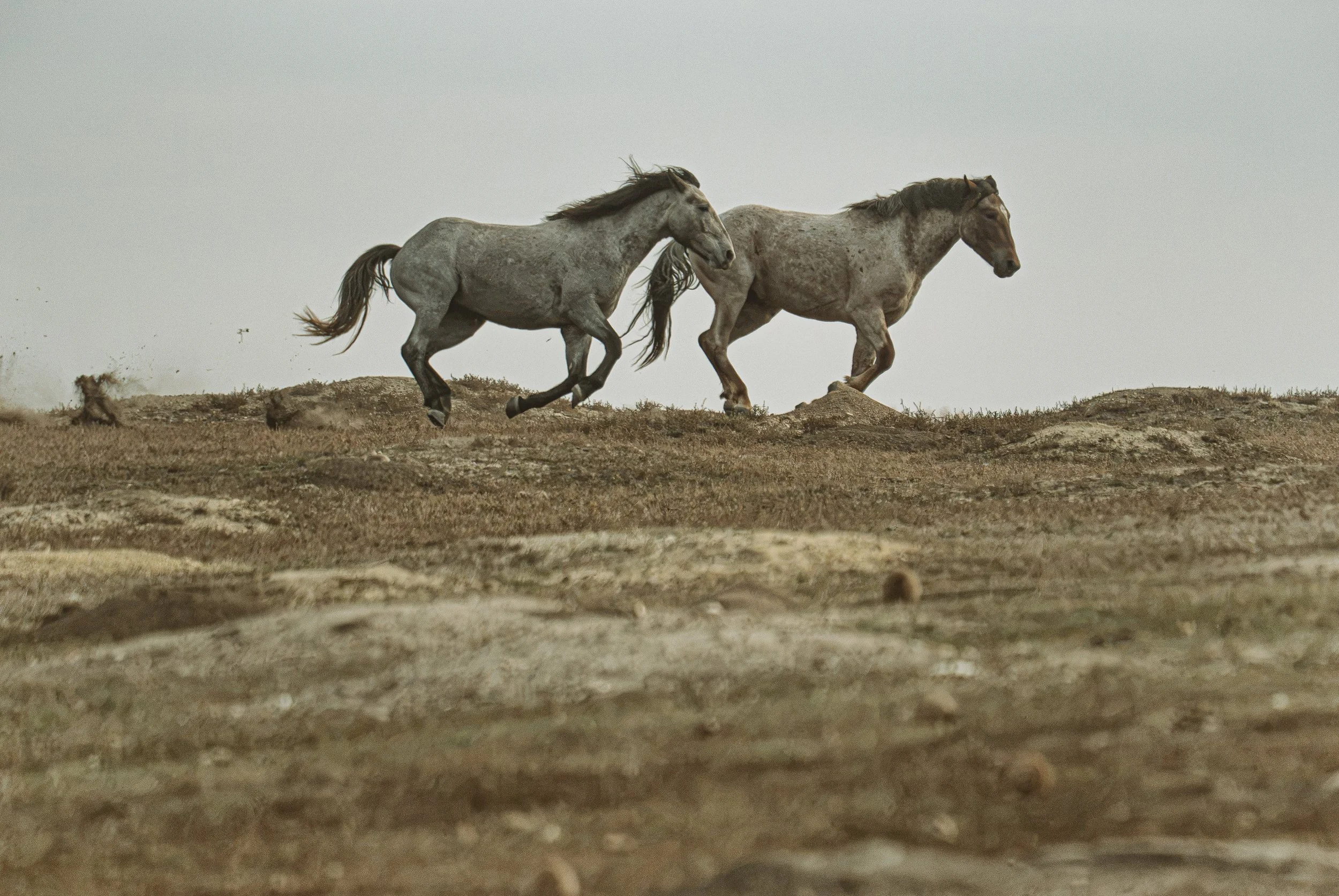
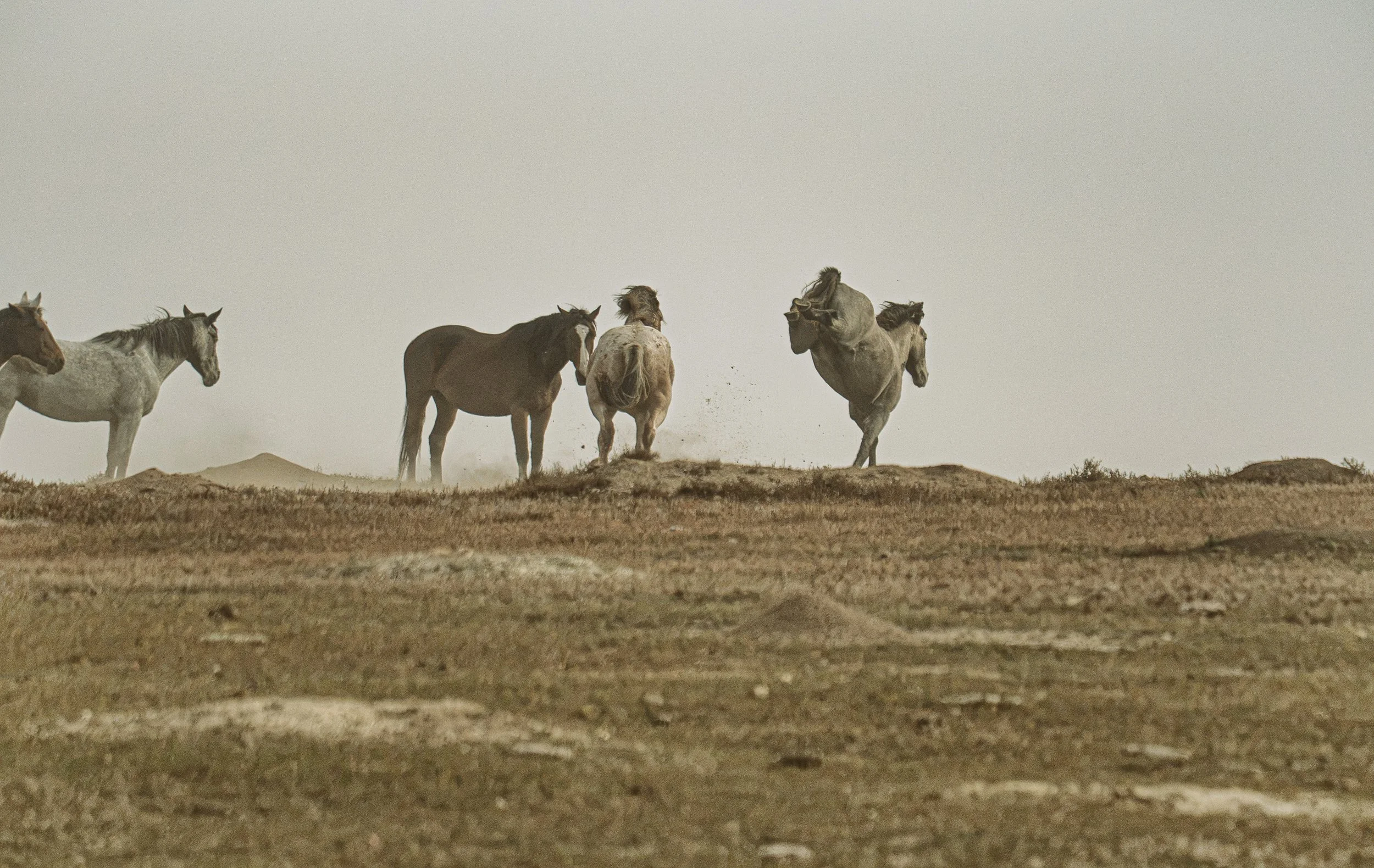
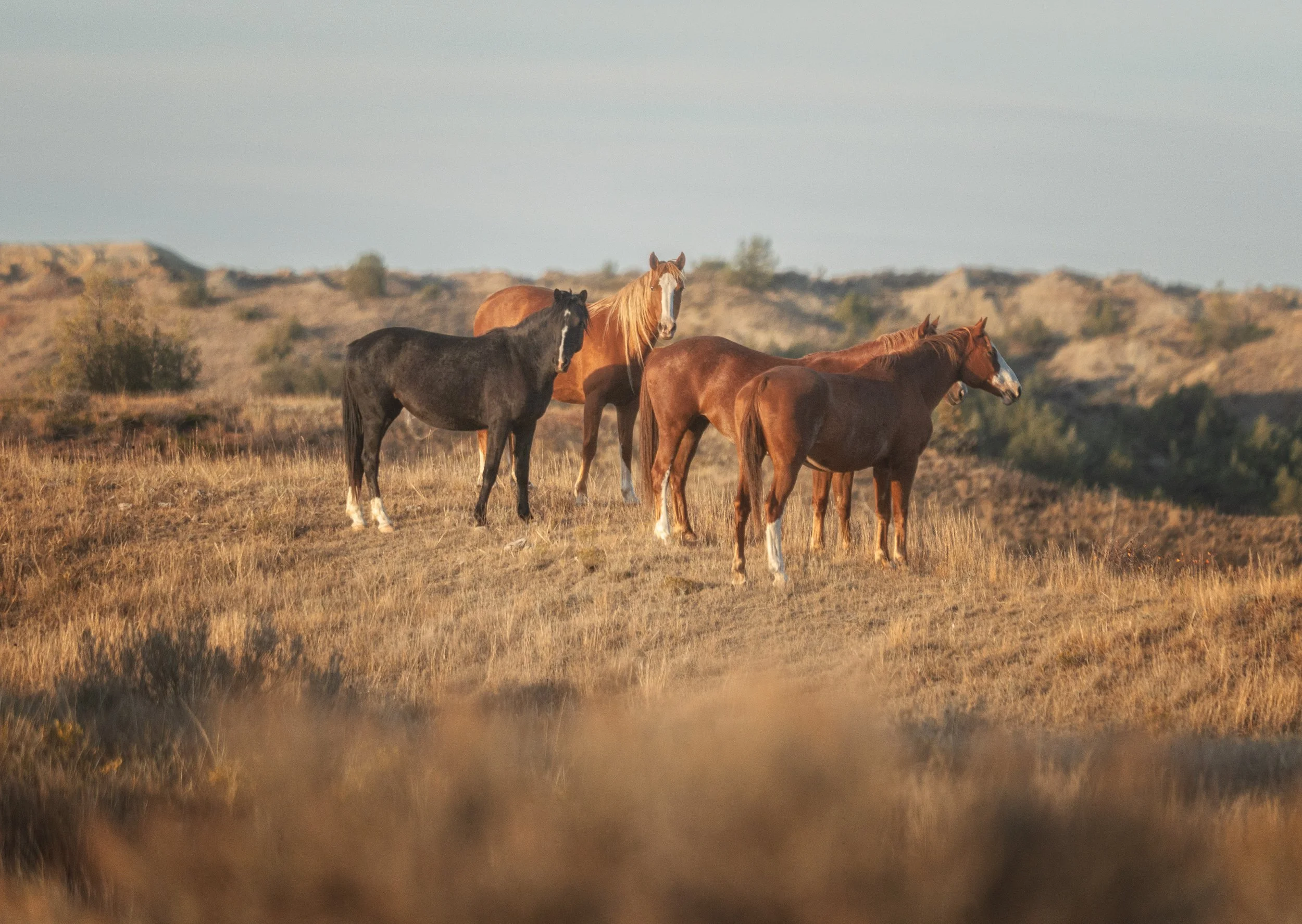
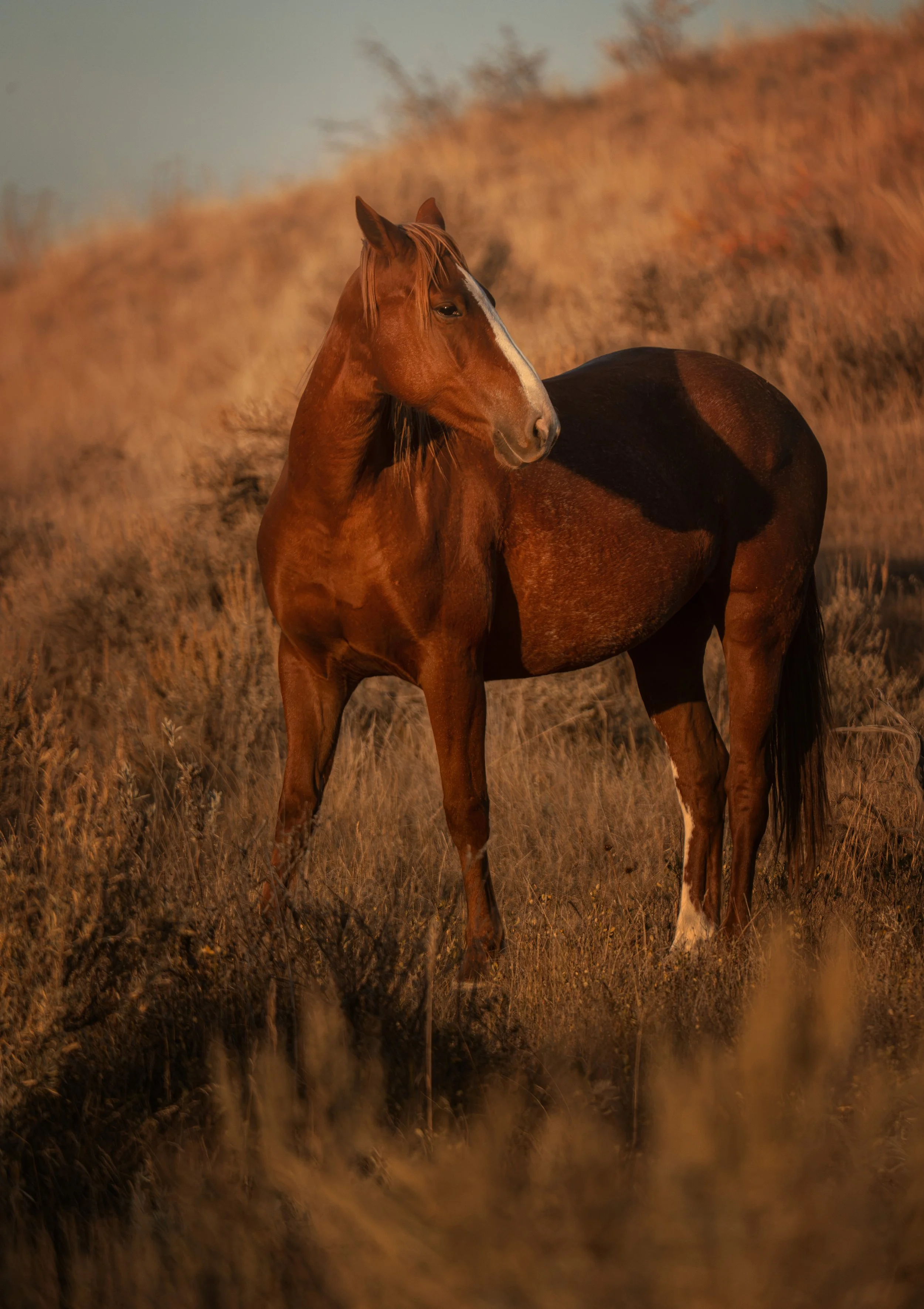
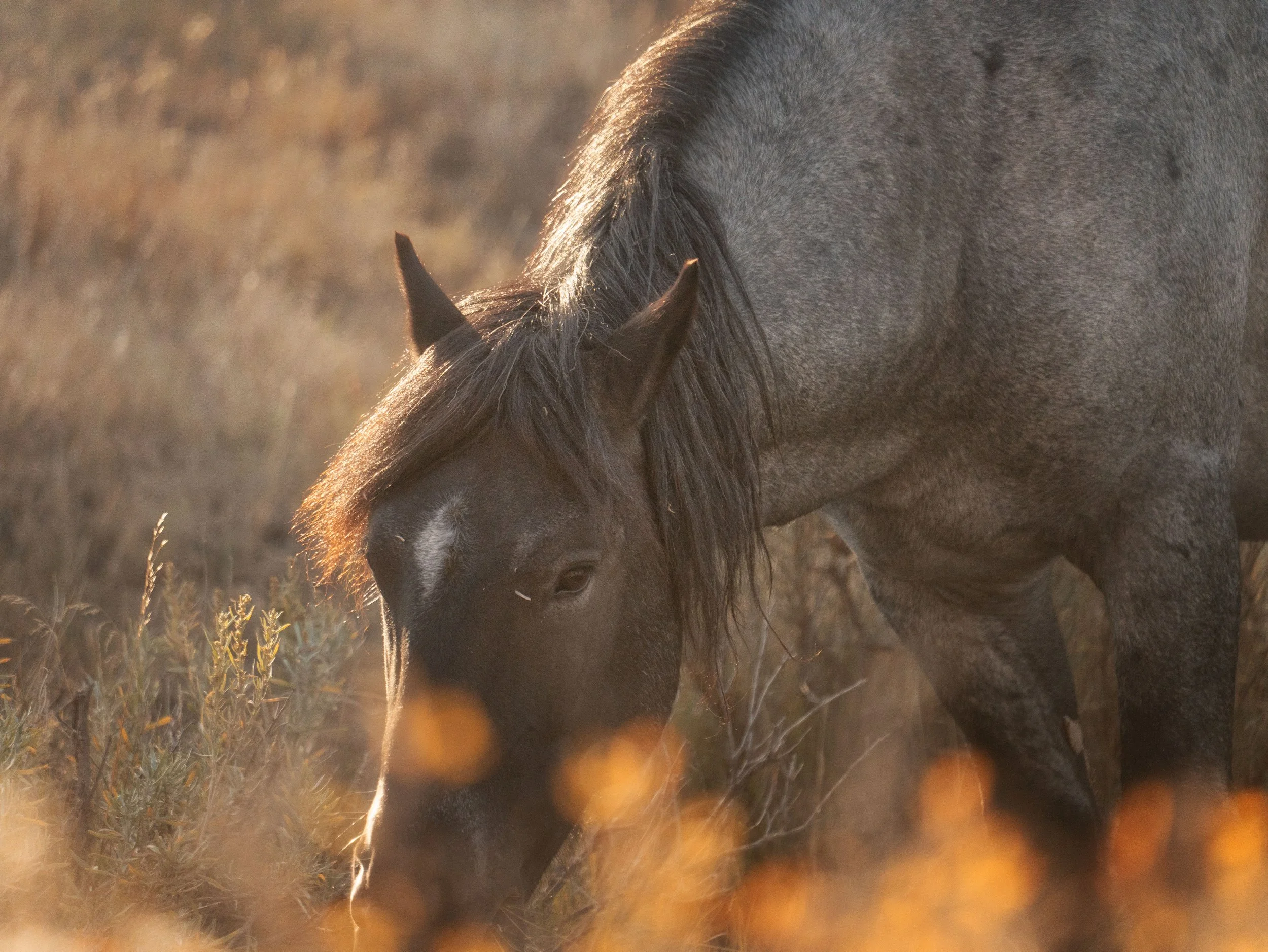
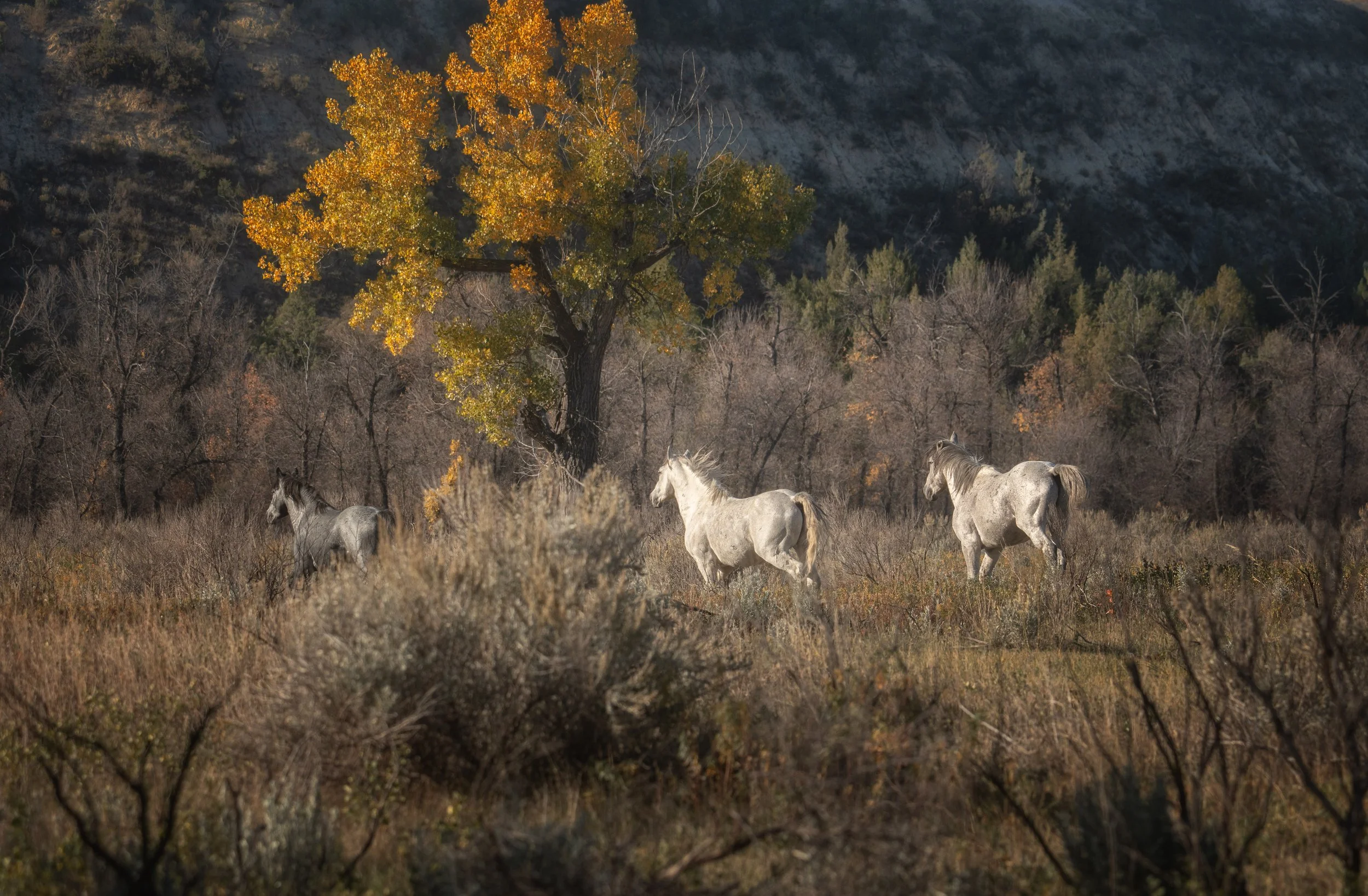
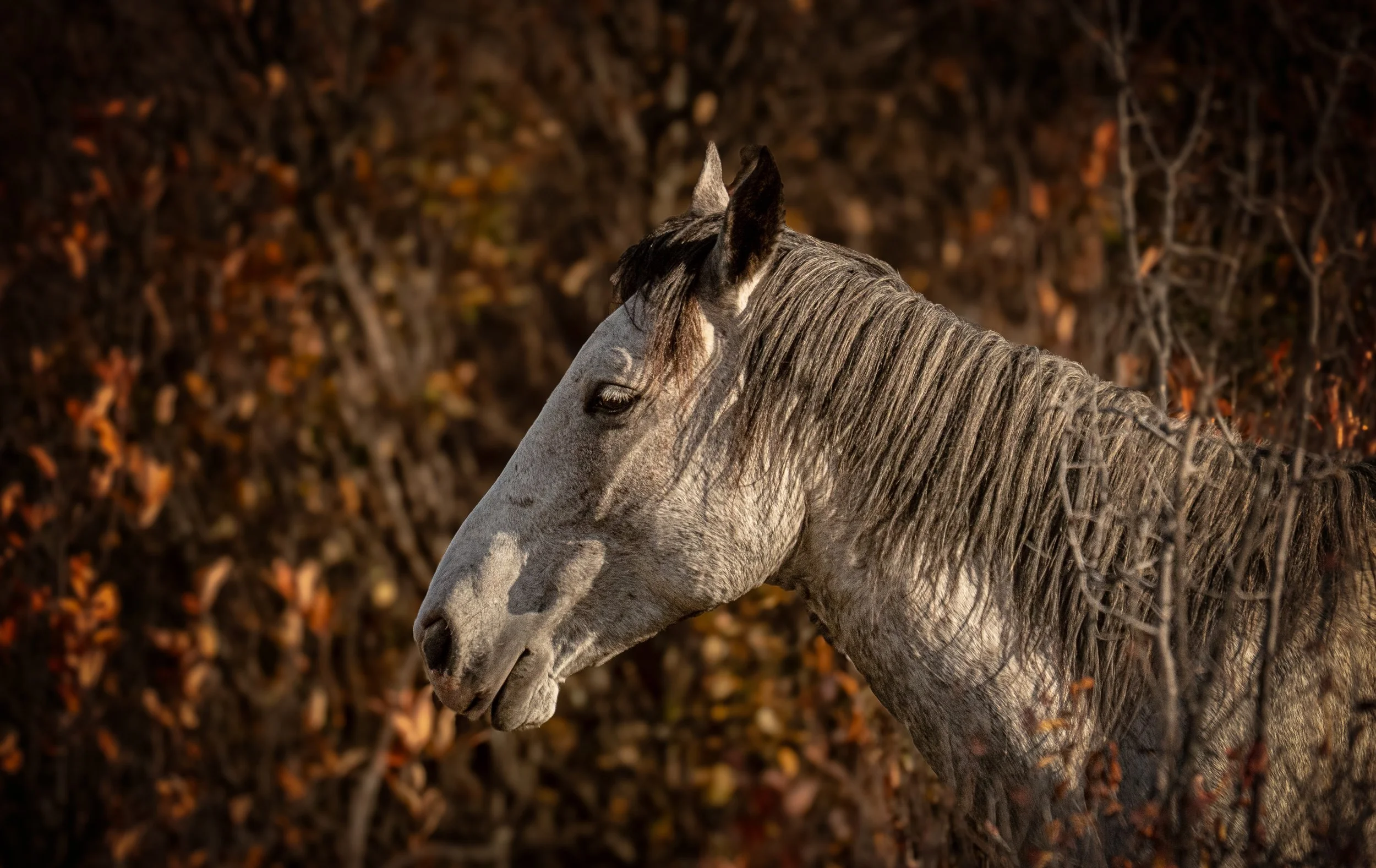
More images of the wild horses found around the South Unit
"In a great many--indeed, in most--localities there are wild horses to be found, which, although invariably of domestic descent, being either themselves runaways from some ranch or Indian outfit, or else claiming such for their sires and dams, yet are quite as wild as the antelope on whose domain they have intruded."
The current herd of horses roaming the park are the descendants of those who eluded capture during a 1954 roundup. Up until 1970 the Park Service had tried to remove all of them but ultimately changed course. Now they are managed as an “historic demonstration,” meaning they are not under the protection of the Bureau of Land Management and thus not covered by the Wild Free-Roaming Horses and Burros Act of 1971. Every few years NPS culled the herd by using helicopters to capture and sell them at auction, but for the last decade or so they have pursued alternative methods of managing the population, including using contraception, corral trapping and other low-stress techniques.
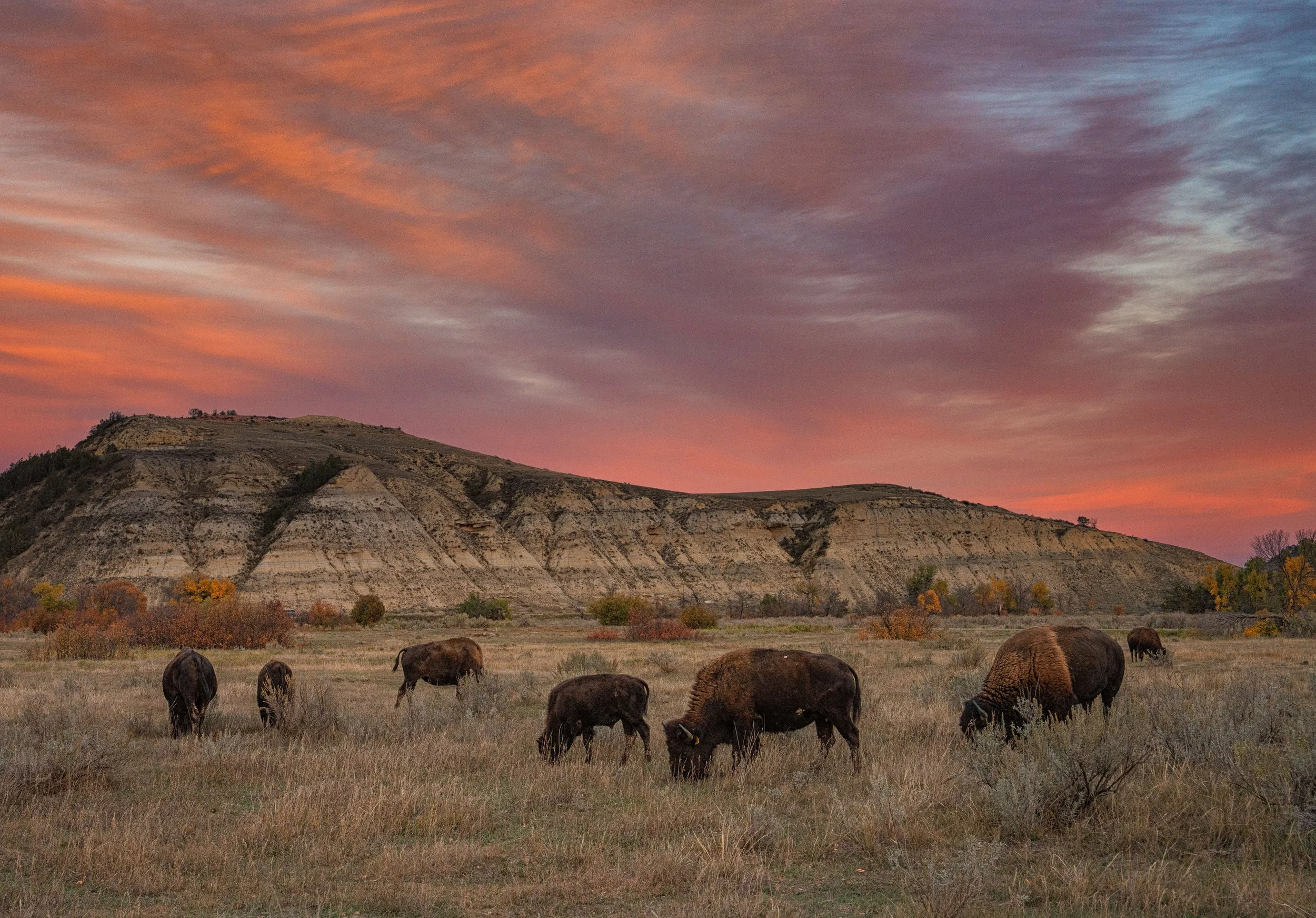
Bison grazing in the pasture in front of Peaceful Ranch just off East River Road in the South Unit of the park.
"So for several minutes I watched the great beasts as they grazed...mixed with the eager excitement of the hunter was a certain half-melancholy feeling as I gazed on these bison, themselves part of the last remnant of a doomed and nearly vanished race…”
Roosevelt’s legacy as the “conservation president” is, to put it mildly, complicated. As a child he was fascinated with bison and in his early adulthood sought them out as big game to hunt. Later he would lament their near extinction and put into place several safeguards to ensure that sportsmen would not participate in the wanton slaughter of any wild species (See the Boone and Crockett Club, which he helped establish in 1887). However, he also understood that the dependence of the indigenous populations on the continued survival of the ungulates proved to be an obstacle to the advancement of White civilization across the West. Only by depleting their food sources would the United States eventually rid itself of the “Indian question.” On this issue Roosevelt was very much a proponent of Manifest Destiny, yet he would later moderate his views regarding the importance of conserving the bison population and public lands.
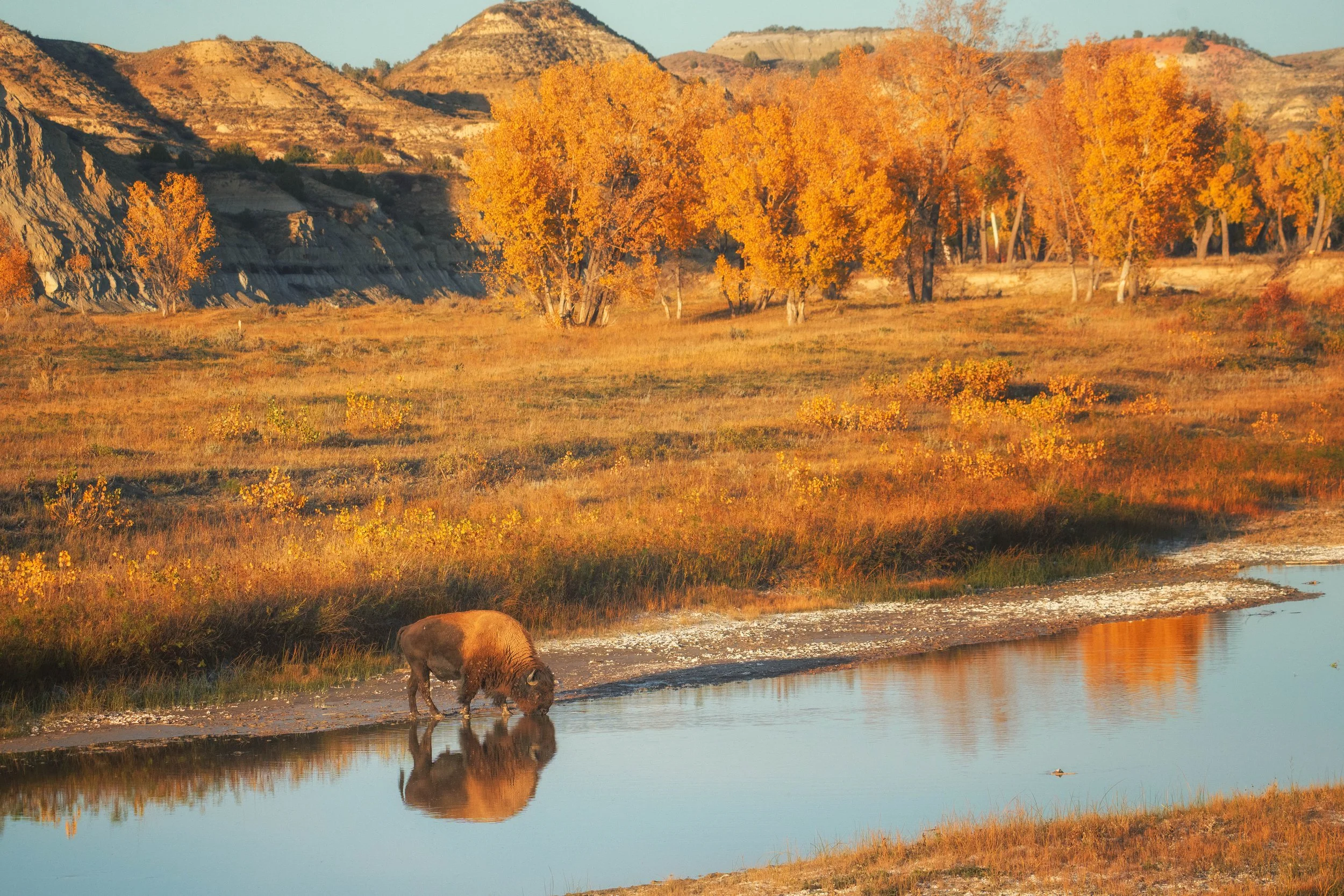
A lone bison drinks from the Little Missouri River just across from Peaceful Ranch.
“The extermination of the buffalo has been a veritable tragedy of the animal world."
As President, Roosevelt initiated the reintroduction of herds in the Oklahoma, Montana and Dakota territories, though at the expense of the ongoing dispossession of native lands. He also would become instrumental in preserving over 230 million acres of national land, primarily through signing the Antiquities Act of 1906, which allowed Presidents to set aside land for national monument status without the approval of Congress. Over the years it helped to establish several monuments, though recently it has also been a source of controversy.
To the extent that his views on indigenous populations followed a similarly enlightened progression, however, consider these three quotes written in the span of 30 years:
(1886) “I suppose I should be ashamed to say that I take the Western view of the Indian, I don't go so far as to think that the only good Indians are the dead Indians, but I believe nine out of every ten are, and I shouldn't like to inquire too closely into the case of the tenth.”
(1914) “The Indians must be treated with intelligent and sympathetic understanding, no less than with justice and firmness; and until they become citizens, absorbed into the general body politic, they must be the wards of the nation, and not of any private association, lay or clerical, no matter how well-meaning.”
(1916) “A few individuals in every tribe, and most of the individuals in some tribes, can move very far forward at once; the non-reservation schools do excellently for these. Most of them need to be advanced by degrees; there must be a half-way house at which they can halt, or they may never reach their final destination and stand on a level with the white man.”
Again, in fairness to Roosevelt, he was not alone in his racist attitudes towards not only native peoples but also Black Americans who served with him during his time as a Rough Rider in the Battle of San Juan Hill in Cuba. As a progressive of his era, he strongly advocated that indigenous communities could become productive members (or “wards”) of the United States should they choose to abandon their tribal identities and accept homesteading and a settled agrarian way of life. He frequently wrote of his firm belief in a racial hierarchy and of the inferior status of people of indigenous background or color, and later in life he supported the pseudoscience of eugenics in encouraging those of proper breeding stock (read: White society) to reproduce to overcome the influx of immigrants.
Yet Roosevelt also believed in the ability of one to overcome the challenges of their race and social station to become successful, though he did so more as a belief in the notion of individual exceptionalism rather than an evolving understanding of racial science. He dined with Booker T. Washington shortly after his inauguration in 1901 only to draw swift condemnation from Southern constituencies (to which Roosevelt replied that he would dine with whomever he pleases, though he did so without further public notification), and he promoted Black Americans to prominent positions, leading to further substantial public backlash and his subsequent rebuttal:
“I cannot consent to take the position that the door of hope—the door of opportunity—is to be shut upon any man, no matter how worthy, purely upon the grounds of race or color.”
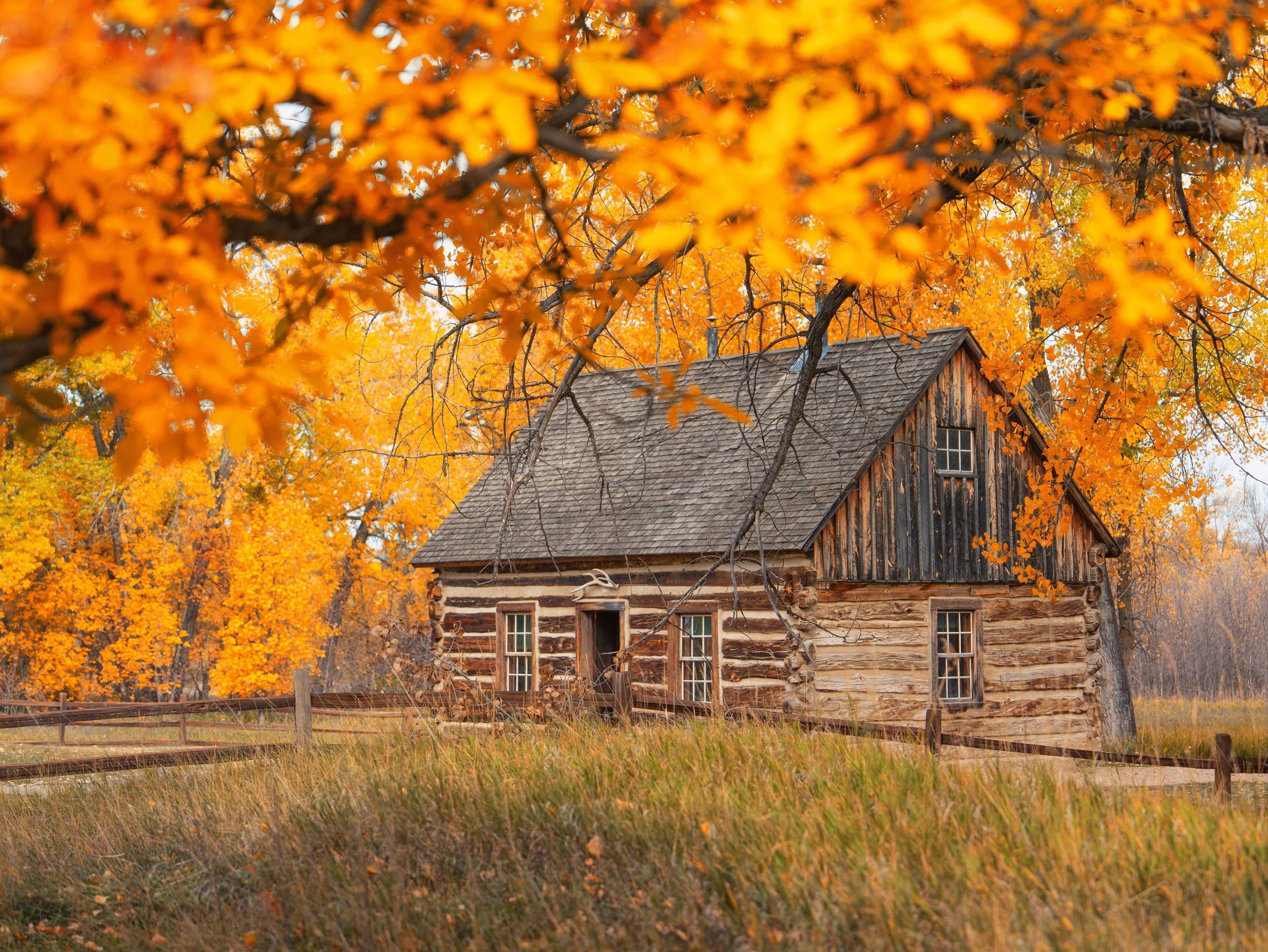
The Maltese Cross Cabin, located at the South Unit Visitor’s Center
"My home ranch-house stands on the river brink. From the low, long veranda, shaded by leafy cotton-woods, one looks across sand bars and shallows to a strip of meadowland, behind which rises a line of sheer cliffs and grassy plateaus. This veranda is a pleasant place in the summer evenings when a cool breeze stirs along the river and blows in the faces of the tired men, who loll back in their rocking-chairs (what true American does not enjoy a rocking-chair?), book in hand--though they do not often read the books, but rock gently to and fro, gazing sleepily out at the weird-looking buttes opposite, until their sharp outlines grow indistinct and purple in the after-glow of the sunset."
One of Roosevelt’s cabins has been preserved and placed at the South Unit Visitor’s Center located in Medora, North Dakota. It was originally part of the first property he owned, the Chimney Butte Ranch which would also become known as the Maltese Cross Ranch, though it would serve only as a temporary home for him as he would later purchase the Elkhorn Ranch just two years later in 1885. (The cabin’s path to its current location was quite circuitous—it was acquired for the St. Louis World’s Fair in 1904 before traveling to Portland, Oregon for the Lewis and Clark Centennial Exposition and then later to Fargo and Bismarck, North Dakota, until returning to TRNMP in 1959.)
Unfortunately, a series of devastating winters decimated his cattle herds and he would eventually sell all of his property by 1898. The above quote refers to his Elkhorn home (no longer in existence), which sat in the bottoms of the Little Missouri River some 20 miles north of where the current Maltese Cross Cabin resides. I was not able to visit this very remote location as it would have taken an entire day to reach driving on unpaved roads, the last three miles requiring a high-clearance vehicle.
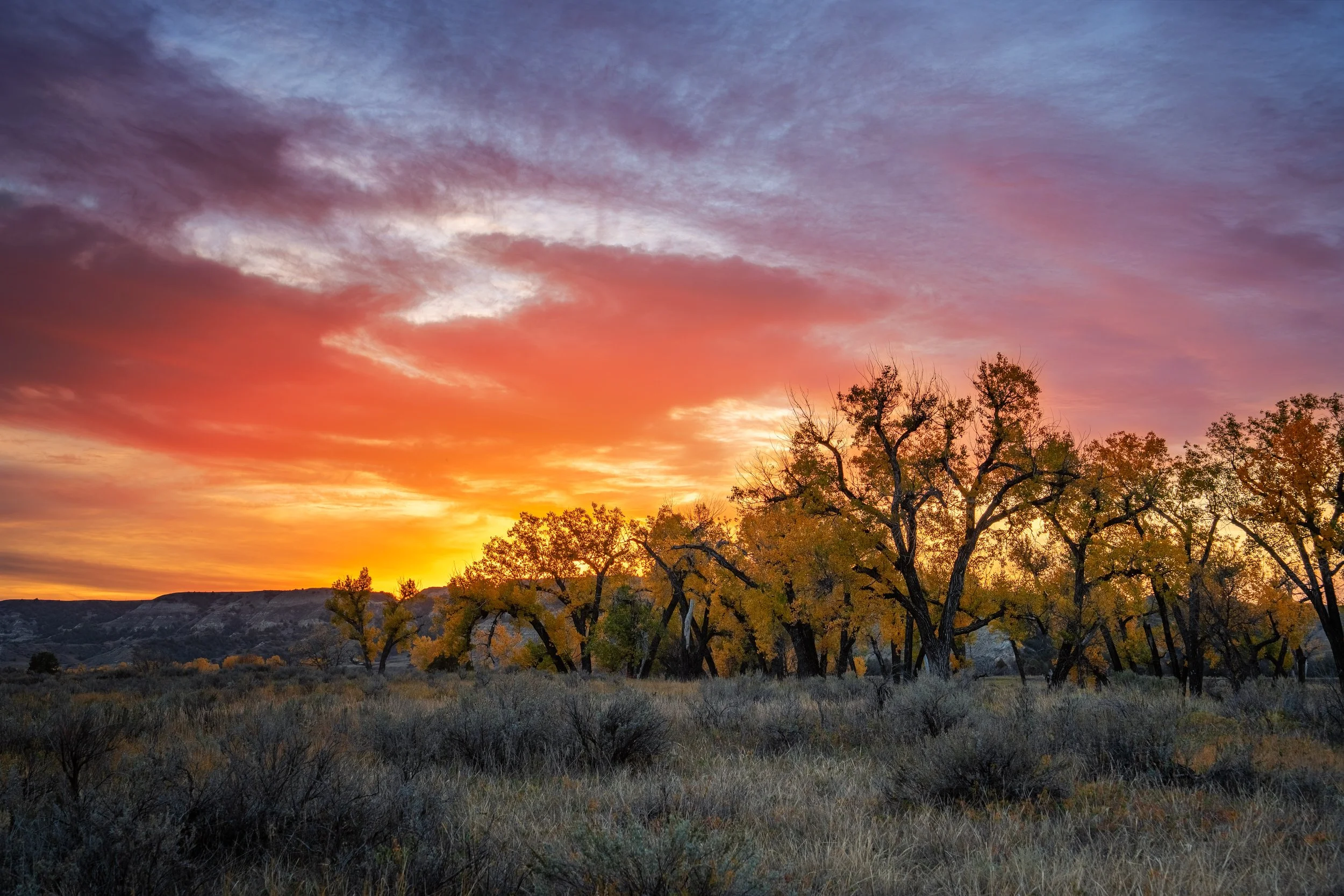
Sunset over the cottonwood trees at Peaceful Valley Ranch
"The farther one gets into the wilderness, the greater is the attraction of its lonely freedom."
I would be remiss if I didn’t mention the newest addition to the complete Theodore Roosevelt National Park experience, located just on the edge of the small town of Medora a few miles away from the South Unit. That would be the Theodore Roosevelt Presidential Library, which opened earlier in the year and serves as a broad historical overview of the life of this towering figure of American history. I have opted not to include any photos of the library—I would recommend that you experience it yourself—but I do think that the particular controversy of its creation does bear some mention as it reflects the overall conflict we in the 21st century face when confronted with the attitudes and worldviews of the 19th and early 20th centuries.
In the planning stages of the library’s development, tribal leaders were consulted regarding the inclusion of Roosevelt’s views and policies on land conservation and indigenous relations. Many were initially hesitant to support the library’s construction unless they were assured that a measured approach was taken to highlight his efforts to dispossess native lands. Most controversial was the placement on the grounds of a statue on loan from New York City and featuring the President surrounded by African-Americans and natives in a subservient posture. With the controversy at Standing Rock finally receding into the background, this was an unnecessarily aggressive gesture that had almost undone any of the goodwill that was sought in the creation of the library in the first place. Fortunately cooler heads prevailed and it was removed, leading to a stronger commitment to include more input from the native communities in the design of the narratives being shared at the library.
“Patriotism is not weakened by truth,” said Lisa Finley DeVille in response to this controversy. She is a Native American currently serving in the North Dakota House of Representatives. “Tribal nations are pushed out of their homelands, forced into reservations, and introduced to devastating diseases by Europeans. Our sacred places became commodities, and the Earth became something to be bought, sold, and exploited for profit…We are not relics of the past. We are part of America’s present and its future. The United States is 250-years-old. Our nations have been here since time immemorial. There is room in this country to honor both histories.”
It is incumbent upon all of us to understand her message. Visiting TRNP was an exhilarating experience, an opportunity to immerse myself in the rhythms of the natural world and disengage from the sturm and drang of the imminent midterm elections and its attendant cacophony. But to see only the rugged beauty of the landscape and admire the wildlife roaming about it would be a disservice to how this park (and almost all of the other Western parks) came into existence. For all of Roosevelt’s ostensible accomplishments to ensure the protection of these natural spaces, it must be reconciled with his actions (and of his predecessors and contemporaries) to depopulate and dispossess them first.
We continue to reckon with the complex and divisive histories of our forebears, and yet to some to interrogate those complex motivations is tantamount to dishonoring them, even dismissing their achievements without properly contextualizing them. We cannot turn a blind eye to their failings, yet we should not forsake their accomplishments, either. It is their motivations that we need to understand, along with the social circumstances that shaped and nurtured their attitudes that led to their actions and beliefs. We should applaud when they rose above their challenges, and properly acknowledge when they struggled or outright failed to transcend them. To do otherwise would be to ignore our own shortcomings or good works. We should continually look in the mirror not as a means to indulge in our own reflections, purely to admire or shame what we see, but to assess in an honest matter that before us is neither the past or the future. It is the now, a product of forces both seen and unseen, dimly comprehended and only half understood, unfinished yet full of potential.
I’ll close with a quote by Mark David Spence from his seminal book, Dispossessing the Wilderness, Indian Removal and the Making of National Parks, which I think perfectly captures the challenges we face. National parks and monuments play a vital role in how we choose to remember and memorialize those that came before us, but it is up to us to make sure that we allow all of those voices to be heard.
“…[N]ational parks reflect a whole spectrum of ideas about nation, culture and even natural origins…[They] serve as a microcosm for the history of conflict and misunderstanding that has long characterized the unequal relations between the United States and native peoples. As common ground, however, national parks might also provide an important arena of understanding and resolution…”
Online Resources Used:
https://www.nps.gov/thro/learn/historyculture/theodore-roosevelt-quotes.htm
https://www.nps.gov/thro/learn/historyculture/park-history.htm
https://home.nps.gov/thro/learn/historyculture/cultural-history.htm
https://home.nps.gov/thro/learn/historyculture/maltese-cross-cabin.htm
https://www.history.com/articles/teddy-roosevelt-race-imperialism-national-parks
https://www.trlibrary.com/tr/conservation/by-the-numbers
https://www.whitehouse.gov/presidential-actions/2026/07/modifying-the-bears-ears-national-monument/
https://www.boone-crockett.org/what-would-roosevelt-say-hunt-fair-chase
https://home.nps.gov/thro/learn/historyculture/peaceful-valley-ranch.htm
Books Cited:
Theodore Roosevelt, Naturalist in the Arena. Edited by Char Miller and Clay S. Jenkinson. University of Nebraska Press: 2020.
Mark David Spence. Dispossessing the Wilderness, Indian Removal and the Making of the National Parks. Oxford University Press: 1999.